
Small bedroom design ideas that start with the bed
Small bedroom design ideas work better when the bed, bedside needs, clothing, light, and daily reset form one compact system.
Useful small bedroom design ideas begin with the largest object and the most important job. The bed has to support sleep, leave a workable route, and coexist with clothes, light, charging, and the things you set down at night.
Trying to fit a smaller version of every bedroom feature usually creates a cramped furniture showroom. A better approach is to build one compact system around the bed, then remove anything that does not support it.
You can see how one small room design choice changes the bedroom in DwellShift. Its Agent can keep the bed, window, wardrobe, and camera view fixed while you discuss a wall light, storage bed, darker color, or different bedside setup before generating.
DwellShift publishes this guide and recommends its own product. We have not tested beds, storage hardware, lighting products, or installation methods for this article. Concept images do not establish dimensions, load capacity, safe fixing, electrical suitability, or code compliance.
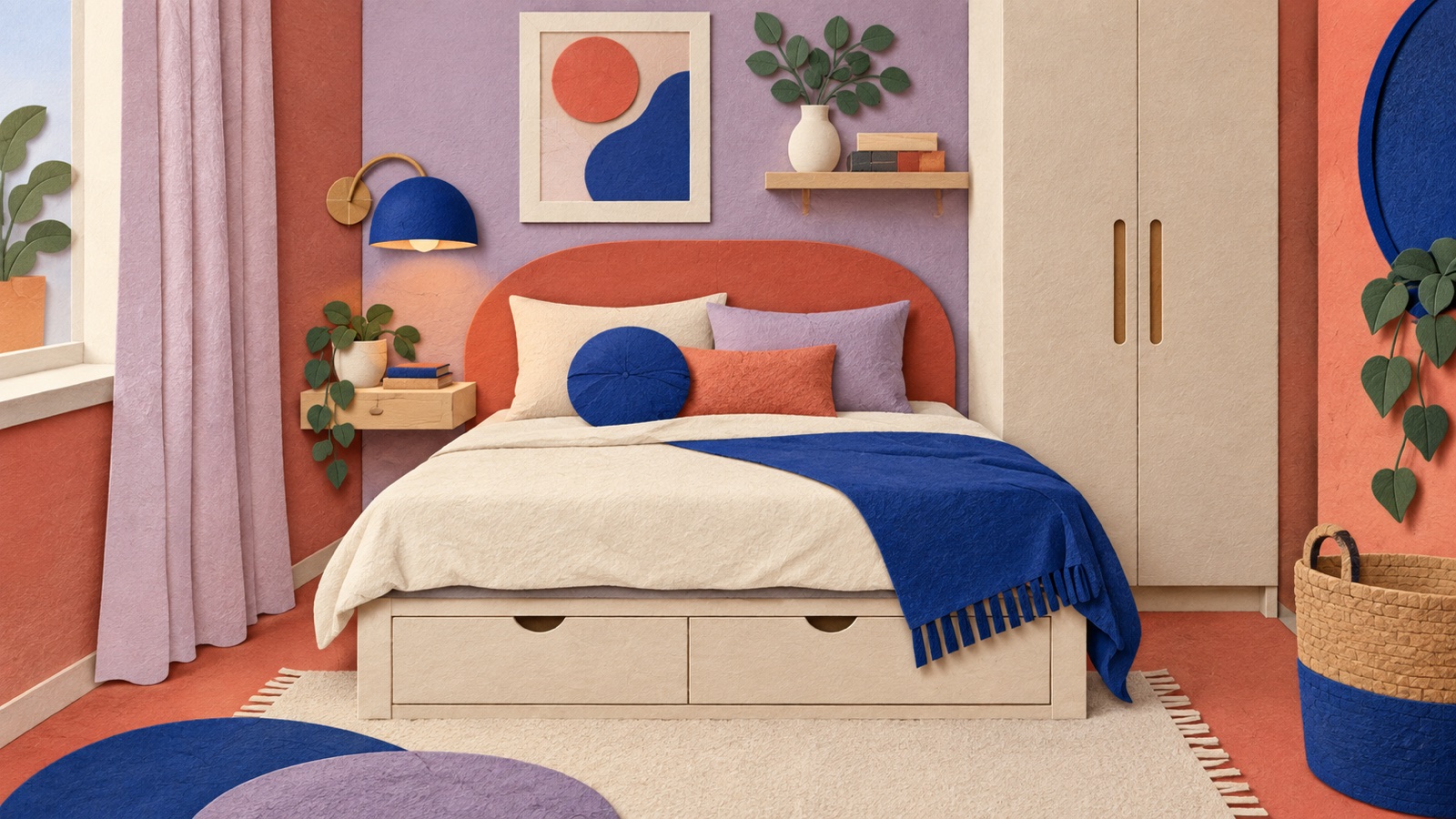
The cover is an AI-generated layered paper illustration. It is not a photograph of a finished bedroom or proof that the pictured storage fits. AI assisted the search research, structure, and draft.
Run the bed-first check
Draw the room with the door, window, radiator, closet, outlets, and any awkward ceiling slope. Add the full bed frame, not only the mattress. Include drawers, lift-up mechanisms, and doors in their open positions.
Then test the room in this order:
| The bed-first check | What to notice | Possible response |
|---|---|---|
| Arrival | Can you enter without turning around furniture? | Move or remove the nearest projection |
| Sleep | Is the head area protected from glare and busy circulation? | Reposition light or simplify the wall |
| Bedside | Where do water, glasses, a book, and a phone go? | Use one shelf, ledge, or compact drawer |
| Dressing | Can storage open and can you stand in front of it? | Change the door type or storage position |
| Reset | Where do worn clothes, laundry, and loose items land? | Give each one a reachable destination |
The table is deliberately short. A small bedroom improves when fewer decisions work harder.
Let one side of the bed do more
Symmetry is pleasant, but it costs space. Two matching nightstands and lamps can consume the width needed to open a closet or move comfortably.
If one person uses the room, place the bed where one generous bedside zone works better than two narrow gaps. A small dresser can act as the nightstand. A wall shelf can hold a glass and book. A headboard with a ledge may replace both tables if it does not create an awkward reach or collect clutter behind the pillows.
For two sleepers, do not erase one person's access without discussing the daily trade. Unequal sides can still feel balanced. One side might have a slim ledge and wall light while the other has a small drawer unit. Repeat the finish or shape rather than forcing identical furniture.
Choose storage by frequency and motion
Storage is useful only when it opens, fits the object, and can be maintained. Before buying containers, sort belongings into three groups: daily, seasonal, and leave-the-bedroom.
Daily clothes need the easiest access. Seasonal bedding may suit enclosed under-bed storage. Luggage can go high if it can be reached safely. Paperwork, hobby supplies, and household overflow may need a home outside the sleep space.
Current small-bedroom guidance from Architectural Digest emphasizes prioritizing the furniture a particular person needs and using fewer multifunctional pieces. That principle is more reliable than adding storage to every empty surface.
Check the mechanism as carefully as the capacity. Drawers need pull-out space. A lift-up bed needs clearance and hardware a user can operate. Bins need room to slide past the rug. A storage bench at the foot of the bed needs enough route left around it. If access is difficult, the space may become a sealed archive instead of daily storage.
Use the walls without filling every wall
Vertical space helps when it concentrates storage. A tall wardrobe or one built-in-looking run can calm the room more than several short pieces.
Keep the busiest storage away from the first sight line if possible. A full-height unit beside the entrance may work if it does not narrow the doorway. A bridge of cabinets over the bed can add capacity, but it needs appropriate structure, secure fixing, safe head clearance, and a form that does not feel oppressive.
Wall-mounted lights release bedside surface. Floating shelves release floor. Both transfer responsibility to the wall. Check construction, fixing, wiring, and the weight of what will be stored. Renters can use plug-in lights and freestanding furniture, with cords routed safely and lease rules respected.
Leave at least one portion of wall quiet. Storage on every surface makes the room feel like the inside of a cabinet.
Make the wardrobe and bed cooperate
The wardrobe is often the second-largest object. Test its doors with the bed in place. Hinged doors provide a full view but need swing space. Sliding doors avoid the swing but can limit access to one section at a time and may require more depth or maintenance.
Inside, allocate space according to real clothing lengths and folding habits. A second hanging rail is useful only if the clothes fit. Deep shelves can lose small items at the back. Drawers may help, but they also need standing and opening room.
Give once-worn clothes a deliberate place. A single hook rail, valet stand, or section of the wardrobe prevents the chair from becoming a fabric pile. Give laundry a container that can be removed without navigating around the bed.
The room feels larger when these daily transitions have an address.
Make light serve the head, closet, and route
A single ceiling fixture can leave the face, wardrobe, and book in shadow. Divide the needs.
Bedside light should reach the page without exposing a bright source to the other sleeper. Wardrobe light should help distinguish colors and see into shelves. A softer low-level light can make the nighttime route visible without waking the whole room.
The bedroom lighting guide covers brightness, color appearance, glare, controls, and fixture scale in detail. In a small room, pay special attention to lamps projecting into the walking route and pendants hanging where someone may stand.
Hardwired changes need the correct professional and local requirements. Plug-in solutions still need secure cord routes and suitable products.
Use color to shape the room you have
Pale color can reflect available light, but it does not create floor area. Darker color can make a small bedroom feel settled if the lighting and contrast support it.
Choose the desired effect. A light wall and curtain close in value can soften boundaries. A darker headboard wall can give the bed a clear position. Painting walls, trim, and ceiling in related tones can reduce visual chopping. None of these is automatic; the window direction, floor, furniture, and evening light change the result.
Test a large paint sample beside the curtain and bedding at morning and night. Keep the textile palette controlled enough that the bed reads as one composition. One bold color, patterned quilt, or large artwork can provide character without scattering small accents across the room.
Question every extra function
A bedroom desk, vanity, armchair, television, exercise area, and bookcase may all be desirable. A compact room cannot always carry them simultaneously.
Rank the secondary functions. If work is essential, a shallow desk might replace one bedside table and close down visually after work. The home office setup guide helps check screen position, daylight, chair movement, and cables. If occasional guests are the main concern, a daybed or adaptable sleeping arrangement may matter more than permanent office furniture.
If the room belongs to a renter, the renter-friendly decorating guide offers reversible ways to add color, light, and storage without pretending every wall can be altered.
Remove the lowest-priority function fully. A tiny chair that holds clothes and blocks a drawer is not a reading corner.
Test one compact system
Write the fixed conditions and one design question:
Keep the window, door, wardrobe, double bed, oak floor, and camera view. Replace the two floor lamps with wall-mounted plug-in reading lights. Add two under-bed drawers and one narrow shelf on the left side. Use coral, lilac, cream, and one cobalt accent. Do not widen the room or add furniture.
Ask the Agent to discuss options first if the bedside storage or color balance is undecided. After generation, compare the result with the source. Check whether the room secretly became wider, the wardrobe lost depth, the bed shrank, or a door disappeared.
Tape the full bed frame and storage opening positions on the floor before buying. Review comfort, delivery access, product instructions, wall construction, and electrical work in the real room.
Small bedroom design succeeds when the bed, clothing, light, and reset routine support one another. It does not need every aspirational feature. It needs a calm place to sleep and a realistic place for the things that happen around sleep. To keep those requirements together, build the bedroom around the bed in a private project.
From reading to reimagining
Explore these ideas in your own space
Find a tool for the next step in your project.