
Guest bedroom ideas for a room that works between visits
Guest bedroom ideas should support sleep, privacy, luggage, charging, and an easy reset while keeping the room useful when nobody is staying.

Good guest bedroom ideas answer two questions at once: can somebody sleep, dress, charge a phone, and close the door comfortably, and can the room remain useful during the weeks when nobody is staying?
A guest room does not need to imitate a hotel. It needs a reliable bed, understandable light, somewhere for luggage, a little empty storage, and enough privacy that a visitor does not feel as if they are sleeping inside somebody else's overflow cupboard.
DwellShift's home design starting point shows how the wider product turns room photos and requirements into visual directions. For this room, the useful requirement is not simply "make it welcoming." It is a checklist of what a visitor needs and what the room must do between visits.
You can then compare the guest room direction in DwellShift's room design Agent, keeping the bed, window, storage, and second use explicit before generation.
DwellShift publishes this guide and recommends its own product. We have not tested mattresses, bedding, lighting products, furniture, or accessibility outcomes for this article. Check dimensions, comfort, fire and electrical safety, secure fixing, product instructions, and the needs of expected guests in the real room.
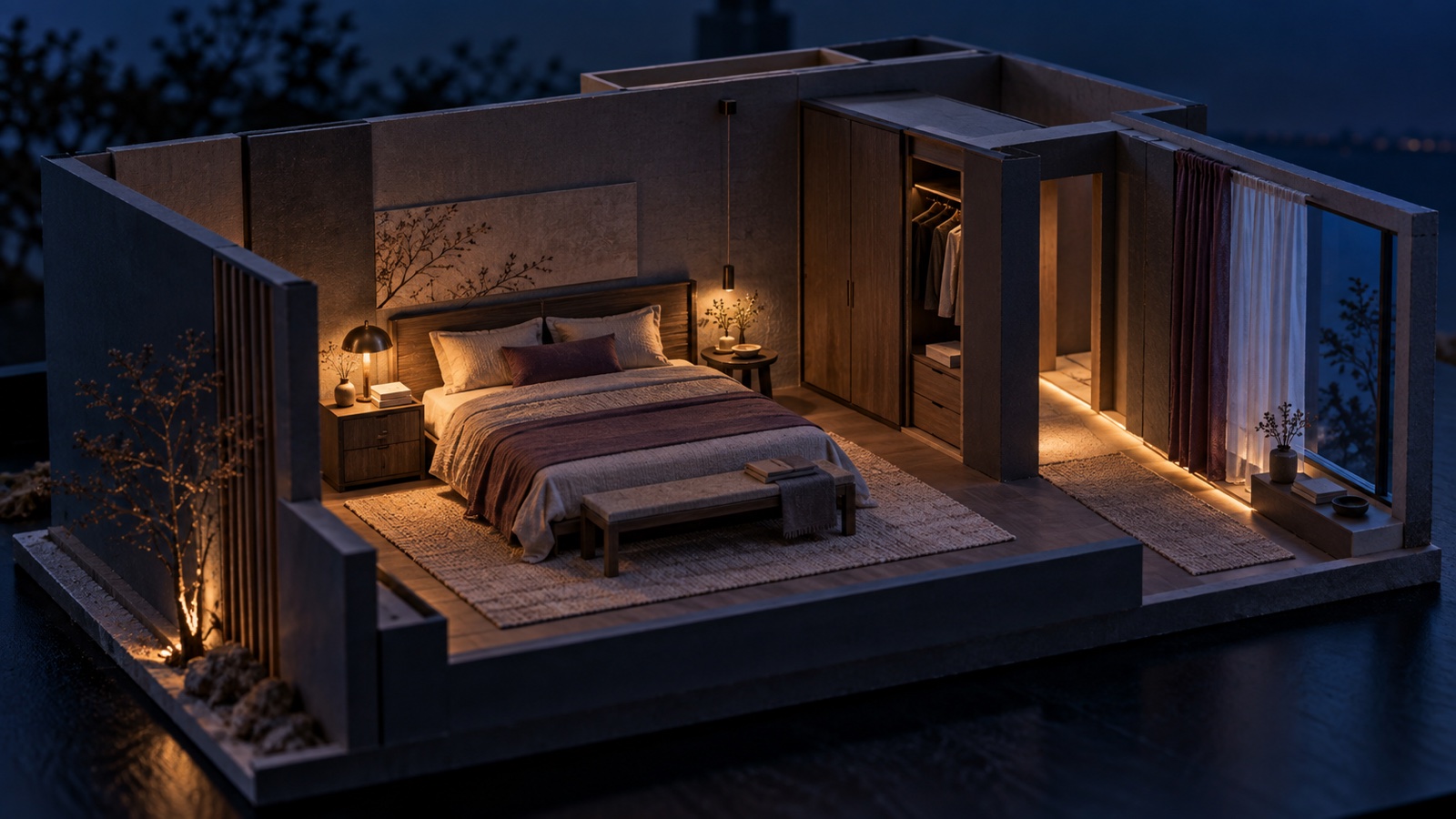
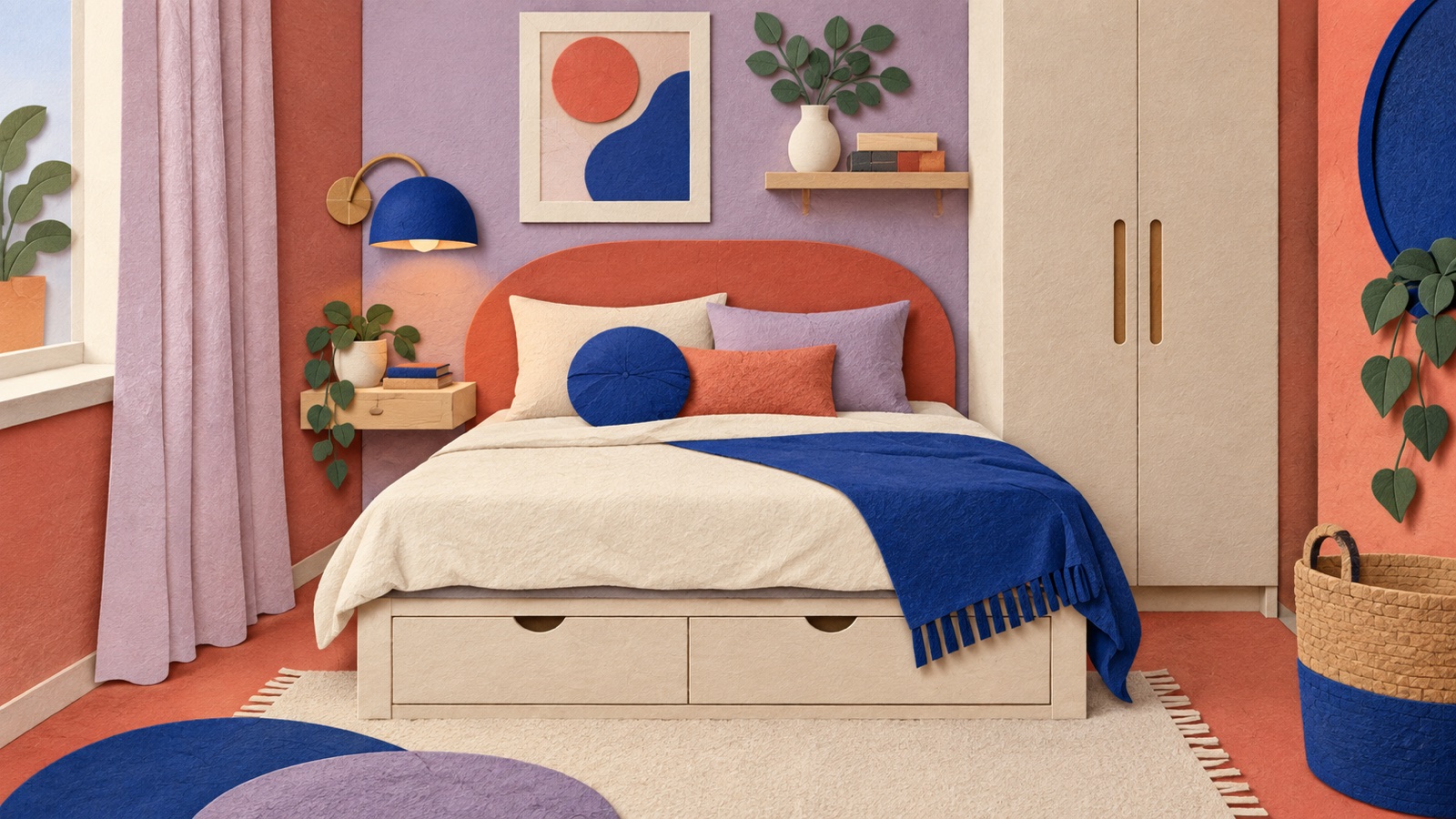
The cover is an AI-generated colored-pencil illustration. It is not a photograph of a completed room or evidence that the furniture fits. AI assisted the search research, structure, and draft.
Run a one-night arrival test
Imagine arriving after dark with a small suitcase. Do not explain the room to yourself. Notice what a first-time visitor would have to guess.
| Guest-ready check | What the visitor needs | Useful response |
|---|---|---|
| Arrival | A clear path from door to bed | Remove stored furniture from the route |
| Luggage | A clean surface that is not the bed | Bench, rack, chair, or cleared floor zone |
| Bedside | Water, glasses, book, and phone within reach | Stable surface and reachable outlet |
| Sleep | Light control, comfortable bedding, and quiet | Lined curtain, layers, and simple controls |
| Dressing | Hooks, mirror, and some empty storage | Clear a drawer or section of rail |
| Privacy | A door, window covering, and personal time | Check locks, gaps, and sight lines |
| Departure | A place to leave used towels and bedding | Basket, hook, and obvious instructions |
This test catches the parts that decorative photographs omit. It also shows what the room does not need.
Give the suitcase a place before adding a chair
An upholstered chair looks generous until a suitcase takes over the bed and the chair becomes a pile of clothes.
Choose one luggage position first. A bench at the foot of the bed works only if the route remains comfortable. A folding luggage rack can disappear between visits. A sturdy chair may serve two jobs when its seat is flat enough and the guest can still sit elsewhere. In a tight room, one clear floor area beside a wall may be better than another piece of furniture.
Keep the route from the door to the bed and bathroom understandable. If the room is genuinely compact, the bed-first small bedroom method helps check the full bed frame, wardrobe opening, and daily movement.
Leave storage visibly empty
Guests are unlikely to unpack into a wardrobe that appears private or full. Empty space must look intentional.
Clear a short section of hanging rail and provide several usable hangers. Leave one drawer or shelf fully empty. Add hooks where a coat, robe, or bag can hang without blocking a door. If the room is used as household storage, contain those items behind one closed door or in labeled boxes rather than distributing them across every surface.
Do not fill open shelves with decorative objects and expect a visitor to rearrange them. One or two books, a tray, and a small object can make the room feel considered. The remaining surface should still accept personal belongings.
Make both sides of the bed understandable
Matching bedside tables are optional. Reachable light and a stable landing surface are not.
For a double bed, test both sides while lying down. Can each person reach a switch without crossing the other? Is there somewhere for a phone, water, glasses, and medication? Does one side end against a cold wall or a curtain that cannot close?
A small wall shelf may replace a table. A dresser may act as one larger bedside surface. Plug-in wall lights can release space, provided their cords are safely routed and the product is suitable. Hardwired work belongs with a qualified professional and applicable local requirements.
The bedroom lighting guide covers reading light, glare, wardrobe light, color appearance, and nighttime routes in more detail.
Layer the bed for different sleepers
One heavy duvet assumes every guest sleeps at the same temperature. Use layers that can be removed without dismantling the bed: a comfortable base, appropriate bedding, and one accessible extra blanket.
Keep spare pillows and linens clean, dry, and obvious. A visitor should not need to search a high cupboard. If pillow options differ, a simple explanation is more useful than a decorative mountain that has to be moved before sleep.
Current Martha Stewart guest-room guidance similarly focuses on comfort, usable surfaces, and a room that can support work or relaxation. Treat those as functions to check rather than products to copy.
Mattress preference is personal. If the bed is used rarely, inspect it before a visit rather than assuming low use means good condition. Check support, odors, stains, protectors, and the stability of the frame.
Control morning light and nighttime confusion
A guest does not know which switch controls which light. Keep controls simple and make at least one bedside light easy to operate.
Window treatments should provide the level of privacy and light control the location requires. A sheer curtain may soften daylight but fail at night. A blackout layer may help sleep but make the room difficult to ventilate or brighten in the morning if the controls are awkward.
Walk the route to the bathroom after dark. Remove loose rugs, trailing cords, and furniture corners from the path. A low, shielded light may help, but position it so it does not shine into the sleeper's eyes.
Let the second use reset quickly
A guest room often spends more time as an office, hobby room, exercise space, or family storage room. The second use should be easy to pause.
If the room is an office, give work equipment closed storage and a clear shutdown routine. A compact desk can remain, but the chair should not block wardrobe or luggage space. The home office design guide helps check daylight, screen position, cables, and chair movement.
If the room supports hobbies, keep current materials in one movable or closed unit. If it supports exercise, make sure equipment has a safe storage position. Avoid a conversion that requires carrying half the room downstairs every time somebody visits.
Set a reset target: the room should become guest-ready through one contained sequence, such as clearing the desk, opening an empty drawer, adding clean linens, and placing the luggage rack.
Add information without turning the room into a noticeboard
A small card can hold the Wi-Fi name, house alarm or lock instructions, and any essential nighttime information. Keep private account details and unnecessary rules out of view.
Provide a reachable outlet rather than an unfamiliar collection of chargers. If an extension or power strip is used, choose and position it appropriately and follow its instructions. A carafe or glass may be useful where the water is suitable and the item can be cleaned reliably.
Think about scent, temperature, and noise. Avoid strong fragrance as a substitute for fresh air. Show the guest how to adjust heating or cooling if that is available. Check that rattling blinds, bright indicators, or noisy clocks do not become the room's main feature at 2 a.m.
Test the room with a preservation list
Use a wide photo and a brief tied to the arrival test:
Keep the bed, window, curtains, oak desk, wardrobe, floor, and camera view. Clear the chair and desk surface. Add a folding luggage rack by the short wall, one empty hook rail near the wardrobe, two simple bedside reading lights, and a rust-colored blanket. Do not widen the room or add decorative furniture.
Ask the Agent to discuss options before generation if the luggage position or desk reset is unresolved. Reject any image that removes required storage, moves a window, enlarges the room, or hides the second use.
Then verify the idea physically. Measure the luggage rack and open wardrobe. Sit on both sides of the bed. Operate the lights. Close the curtains after dark. Clear a real drawer.
A guest bedroom feels generous when the room is easy to understand and some space has been left for another person. Comfort comes from fewer guesses, not more cushions. When the checklist is ready, turn it into a private guest-room project.
From reading to reimagining
Explore these ideas in your own space
Find a tool for the next step in your project.