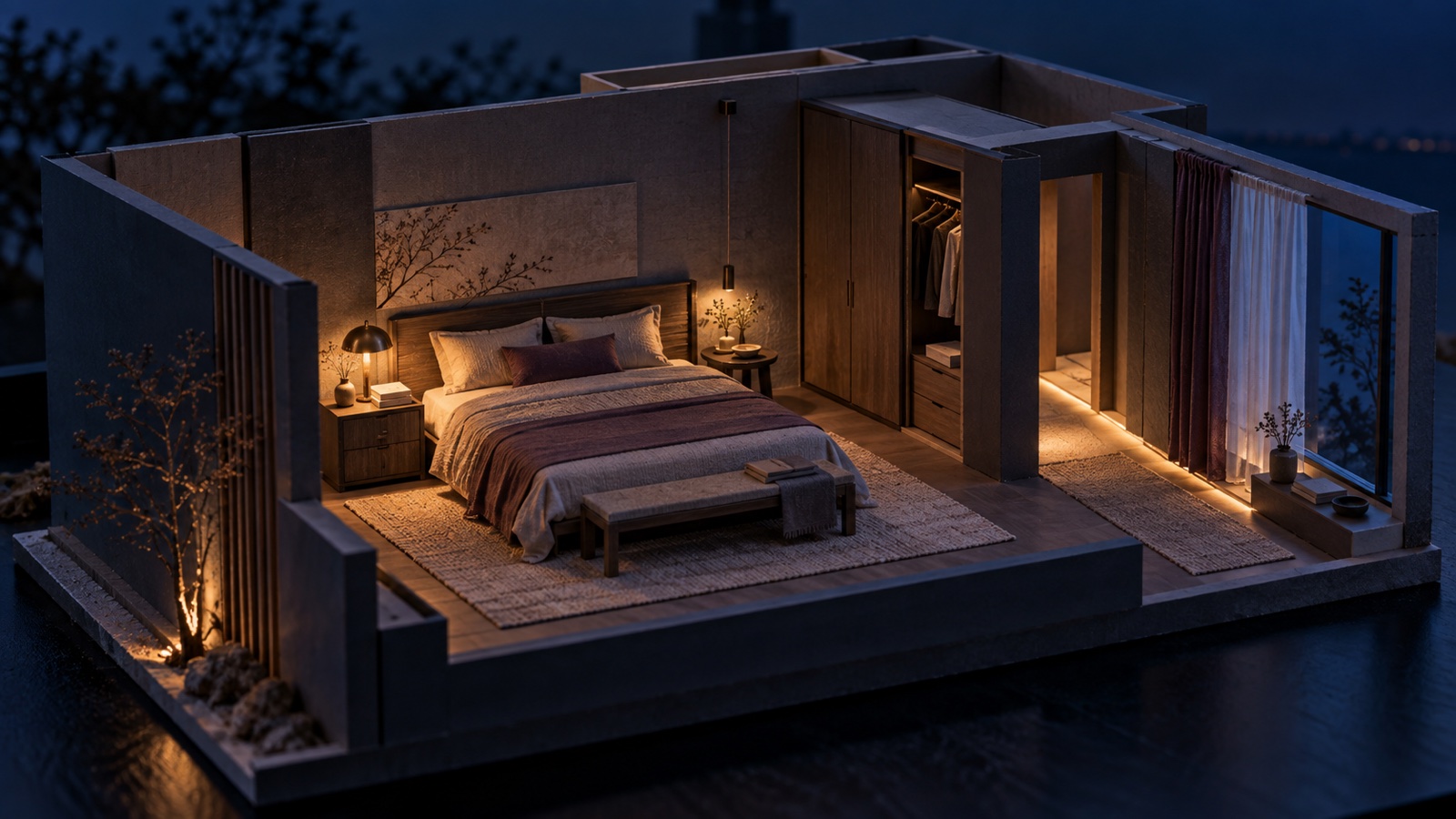

Bedroom lighting ideas for reading, dressing, and winding down
Build a bedroom lighting plan around real tasks, comfortable brightness, warm color, useful controls, and less bedside glare.

One ceiling fixture can technically light a bedroom. It can also throw your own shadow into the wardrobe, glare at you from bed, and make the room feel like a place to search for a lost earring.
A bedroom has incompatible lighting jobs. You need enough light to dress and clean, a focused source for reading, and a calmer setting when the day is ending. Asking one bulb to do all of that usually produces a compromise nobody enjoys.
Plan the light around the room's activities, then choose the fixtures.
Map the room after dark
Stand at the doorway at night and switch on the lights you already use. Notice where the room is dim, where the light hits your eyes, and where your body creates a shadow.
Mark the places that need light:
- each side of the bed
- wardrobe drawers and hanging rails
- mirror or dressing area
- desk, chair, or changing bench
- the route from bed to door or bathroom
Include daylight in the plan, but do not depend on it for tasks that happen before sunrise or after work. A mirror that performs beautifully beside a window at noon may be frustrating on a winter morning.
Furniture positions matter. A pendant centered in the empty room may not align with the bed once a wardrobe and nightstands are installed. A reading light mounted before the mattress height is known can land above the wrong shoulder.
Give general light a quieter role
Ambient light makes the room navigable and helps with broad tasks such as cleaning or packing. It may come from a ceiling fixture, recessed lights, an indirect cove, or light reflected from walls and ceiling.
Brightness should be adequate without flattening the room. A diffusing shade can soften a visible bulb. Indirect light can reduce glare, although dark walls and ceilings absorb more of it. Recessed fixtures need thoughtful positions so they do not form a bright row above the pillows.
A dimmer makes general lighting more adaptable, provided the lamp and control are compatible. Check product specifications instead of assuming every LED will dim smoothly. Flicker, a limited dimming range, or a faint glow when switched off can turn a good plan into a daily annoyance.
If the room has no ceiling box, do not treat that as a design failure. A switched outlet, wall lights, or a pair of substantial lamps can provide comfortable general illumination. The solution may feel more relaxed than a bright central source.
Put reading light where reading happens
Bedside lighting should illuminate the page without shining directly into the reader's eyes or across a sleeping partner.
Table lamps are easy to change, but their shade height depends on the mattress, nightstand, and sitting position. Wall-mounted swing arms free the nightstand and offer adjustment. Pendants create a clean vertical detail, though their fixed position leaves less room for furniture changes.
Before mounting anything, sit against the pillows in the position you actually read. Have someone hold a temporary light near the proposed location. Check the page, the glare, and what the person on the other side sees.
Symmetry is optional. If one person reads and the other does not, the two sides can use different fixtures while sharing a material or color. A tall lamp on one side and a compact wall light on the other may serve the room better than matching lamps at inconvenient heights.
Controls should be reachable from bed. Nobody appreciates crossing a dark room to switch off the light after getting comfortable.
Light the wardrobe from the front
A bright ceiling light behind you can leave wardrobe contents in shadow. Light placed in front of the wardrobe or integrated into it is more useful.
For open wardrobes and closets, look at how shelves and hanging clothes interrupt the beam. Deep upper shelves can shadow lower rails. Integrated lighting needs safe wiring, suitable components, ventilation where required, and a switch or sensor that behaves predictably.
Color quality matters when distinguishing navy from black or checking an outfit. Review the lamp's color-rendering information and, if possible, see it illuminate actual fabrics before committing to many fixtures.
Mirrors need similar care. A strong downlight can create shadows under the eyes and chin. Light at the sides of the face is generally more even. Avoid placing an exposed bright source where the mirror reflects it straight back at you.
Read lumens and Kelvin, not just watts
Watts describe power use, not how much light a lamp produces. Lumens describe light output. Compare lumen ratings when replacing lamps, then account for the shade, fixture, wall color, and distance from the task.
Color appearance is expressed in Kelvin. The U.S. Department of Energy's Energy Saver guide describes warm or soft light around 2700-3000 K, cooler bright light around 3500-4100 K, and daylight-like light around 5000-6500 K.
Many bedrooms feel comfortable with warm light in the evening. A dressing or desk area may benefit from a somewhat cooler or clearer source, but placing visibly different lamp colors next to each other can look accidental. Test them together rather than buying by label alone.
Kelvin does not tell you everything about quality. Two lamps with the same stated color temperature can render skin, fabric, and paint differently. Buy one sample before replacing every lamp in the room.
Make the nighttime route gentle
The light used at 2 a.m. should not be the same setting used for vacuuming.
A low-level lamp, concealed light near the floor, or carefully aimed motion-activated source can make the route to the bathroom visible without flooding the room. Position sensors so a pet or movement on the bed does not trigger them constantly. Make sure the source does not shine into the sleeper's eyes.
For a broader look at clear nighttime routes and adaptable controls, see the aging-in-place design guide.
Controls can simplify the routine. One switch near the door might turn on the useful arrival lights. Bedside controls can turn the room off. Smart lamps can help where rewiring is impractical, but a physical control should remain understandable for guests and during connectivity problems.
Keep the interface boring. The ideal bedtime scene should not require opening an app and navigating a menu.
Let decorative fixtures earn their place
Bedroom lighting contributes shape, material, and rhythm even when switched off. A paper shade can soften a room full of hard surfaces. A dark metal arm can add definition to pale walls. Frosted glass can distribute light while remaining visually quiet.
Scale deserves a full-size test. Print the fixture outline, tape it to the wall, or hang a cardboard circle at the proposed pendant diameter. Product photographs rarely show how a light relates to your headboard and ceiling height.
Visible cords need a plan. A plug-in sconce may be sensible, but a loose diagonal cable can distract from the room. Route it deliberately and follow the product instructions. Never bury an ordinary flexible cord inside a wall.
For new circuits, hardwired fixtures, bathroom-adjacent work, or uncertainty about the existing wiring, use a qualified electrician and follow local requirements.
Preview atmosphere, then verify performance
An AI bedroom design can compare the visual effect of bedside pendants, shaded lamps, wall lights, and indirect lighting. Use a night or dusk request if you want to judge atmosphere, and ask the concept to keep the bed, doors, and windows in place.
The image cannot calculate whether a lamp supplies enough light, whether a dimmer is compatible, or whether a circuit is safe. It may also invent glowing shelves with no visible power source. Treat it as a way to choose a visual direction. Use photometric information, product data, and professional advice for performance and installation.
The AI lighting verification workflow explains how to separate atmosphere studies from technical evidence.
Questions people ask about bedroom lighting
What type of light is best for a bedroom?
A combination usually works better than one fixture. Provide comfortable general light, focused light for reading or dressing, and a low setting for the evening. The exact fixture types depend on the furniture and electrical options.
Is warm white light good for sleeping areas?
Warm-looking light is commonly chosen for evening comfort. Brightness, glare, timing, and where the source sits in your field of view also affect how restful the room feels.
How high should bedside lights be?
There is no reliable universal height because mattresses, headboards, nightstands, shades, and sitting positions vary. Test the light while seated in bed and place it where the page is lit without a direct view of the bright lamp.
Do bedside lamps need to match?
No. They need to suit the people and tasks on each side. Shared finishes, shade colors, or visual weight can connect different fixtures.
How can I improve bedroom lighting without rewiring?
Try better-positioned table or floor lamps, plug-in wall lights, compatible dimmable lamps, and simple controls. Keep cords secure and visible enough to remain safe, and follow all product instructions.
From reading to reimagining
Explore these ideas in your own space
Find a tool for the next step in your project.