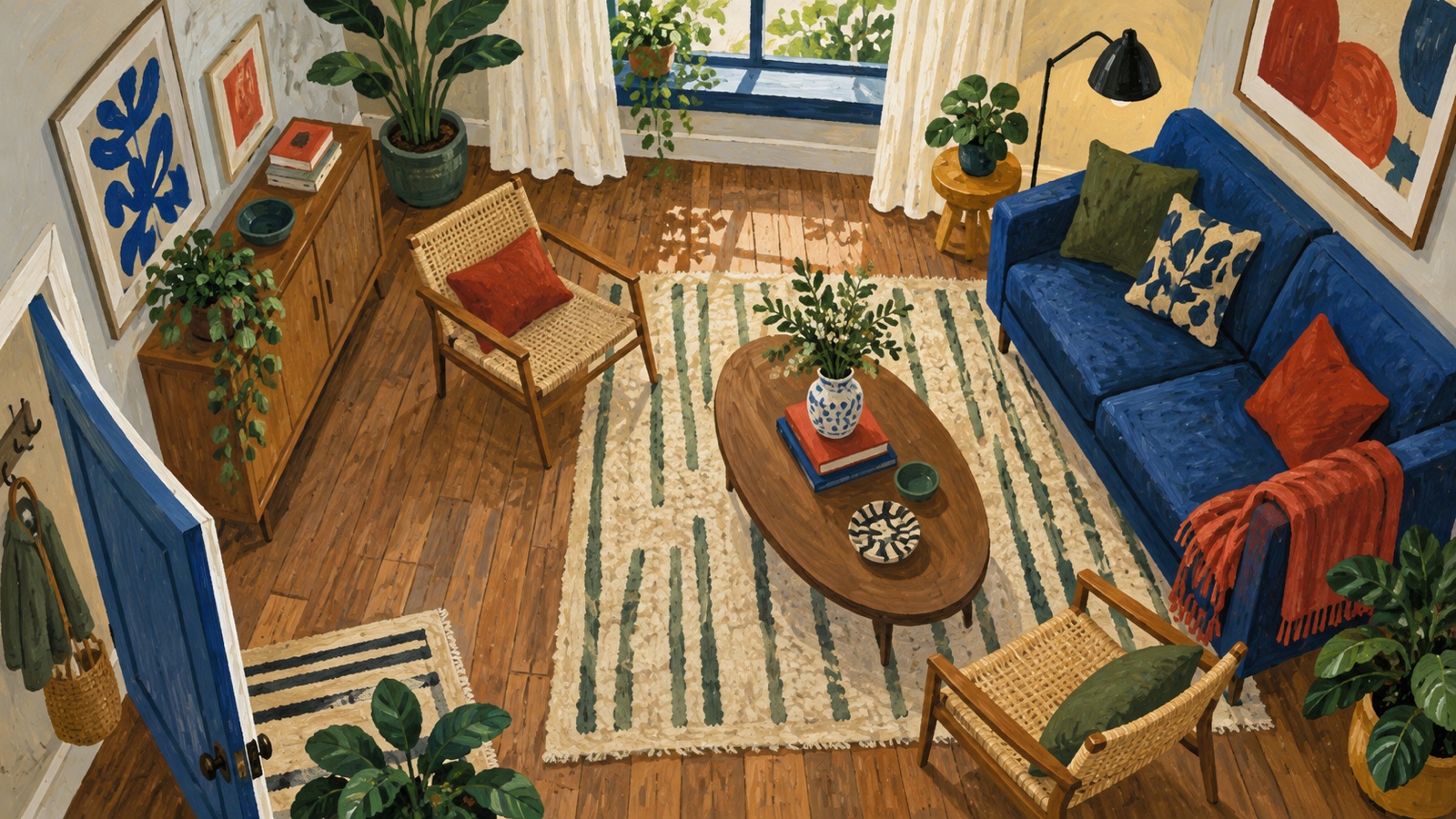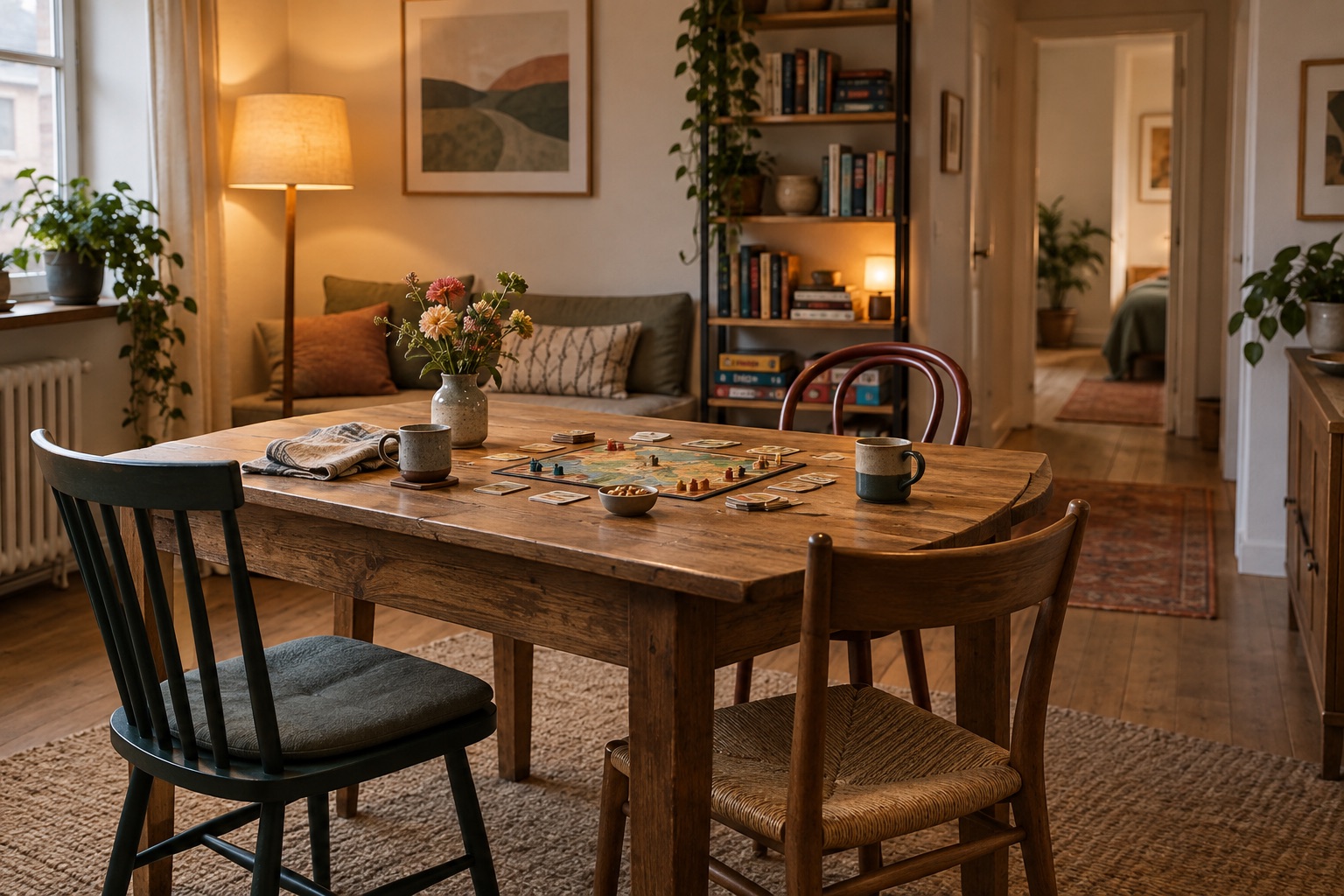

Living room decor ideas: edit the room in layers
Living room decor ideas feel more personal when you build from anchors, color, light, textiles, walls, and useful objects instead of buying a matching set.
The best living room decor ideas make the room more specific to the people using it. They do not require replacing everything or choosing one named style. They require editing what is already there, giving the largest surfaces a relationship, and leaving space for ordinary life.
Work in layers. Begin with the objects that control the room, then add color, light, textiles, walls, and personal things. Stop between layers so each one can answer a problem instead of joining a shopping pile.
If you want to compare a focused change, you can shape a living room design direction with DwellShift. Its Agent can hold the existing sofa, rug, artwork, and items to keep while you discuss what the next layer should do before generating.
DwellShift publishes this guide and recommends its own product. We have not tested furniture, textiles, paint, or generated-image quality for this article. Check real dimensions, comfort, durability, care, flame-safety information, fixing, electrical suitability, and household needs before purchasing or installing anything.
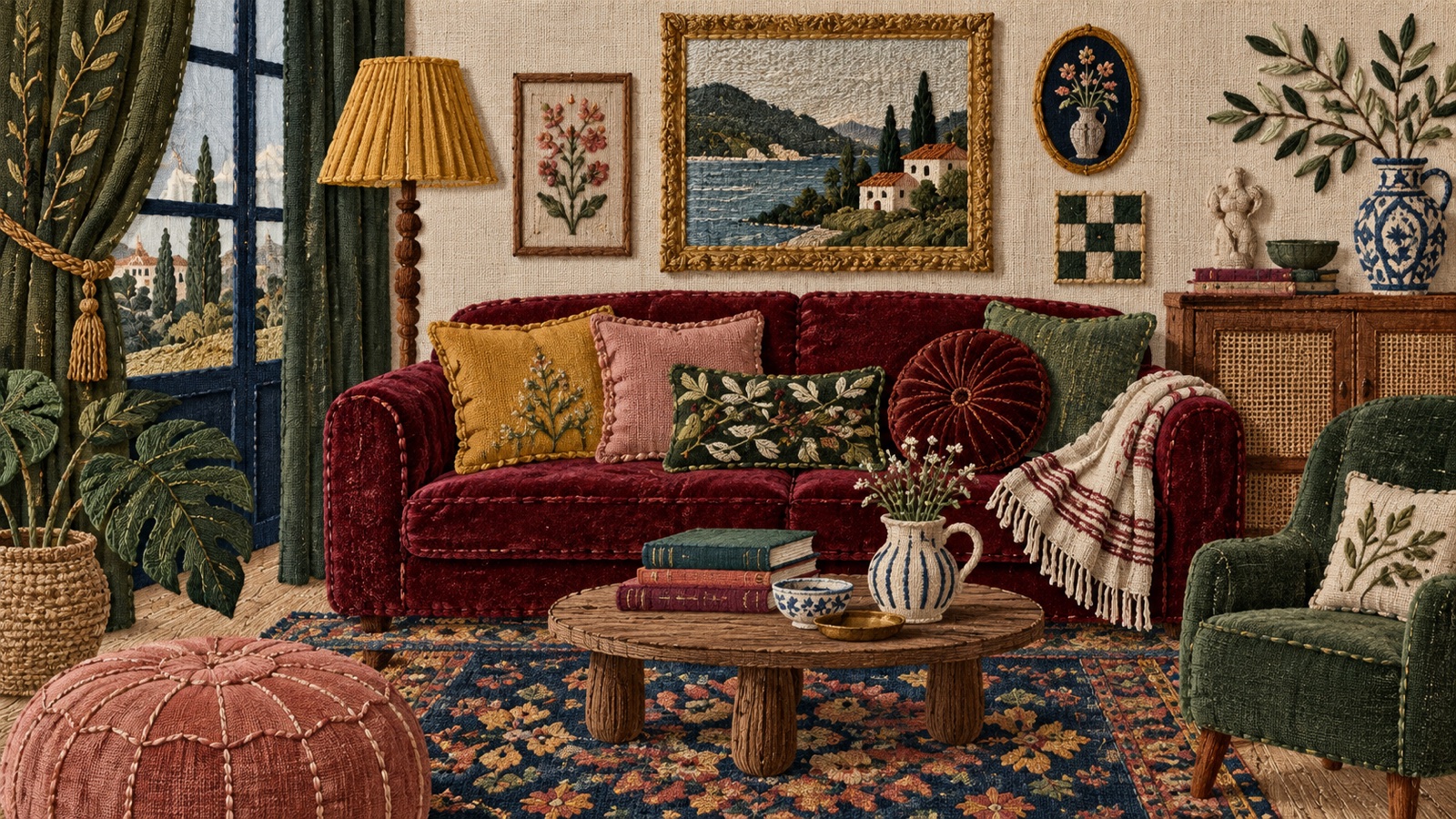
The cover is an AI-generated embroidered textile collage. It is not a photograph of a room, products, or completed project. AI assisted the search research, structure, and draft.
Read the room before adding another object
Take wide photos from the entrance and each corner. Then remove the loose things that arrived without a plan: packaging, temporary storage, abandoned cushions, cables, and decor that migrated from another room.
Do not empty the space into a fantasy showroom. Keep the books, toys, instruments, pet items, plants, and equipment that genuinely live there. The aim is to see the room's real visual structure.
Use this sequence to decide what the next change should solve:
| Decor layer | Question to ask | Sign to stop |
|---|---|---|
| Anchors | Do the sofa, rug, main cabinet, and window treatment belong together? | The room has a stable visual weight |
| Color | Is there one relationship worth repeating? | Three to five main colors are legible |
| Light | Can the room shift between conversation, reading, and evening rest? | Useful areas are lit without glare |
| Texture | Does the room need softness, definition, or contrast? | Materials feel varied without becoming noisy |
| Walls | Does one composition give the eye a destination? | Empty wall remains where quiet helps |
| Personal objects | Which things carry use, memory, or character? | Each visible group can be understood and maintained |
The order is flexible. The pause between layers is the important part.
1. Keep, move, recover, or replace the anchors
The sofa, rug, largest cabinet, curtains, and major artwork create most of the room's visual weight. Judge them before adding small decor.
An awkward sofa may still be comfortable and structurally sound. Moving it, repairing a cushion, changing the legs, or using one well-fitted throw may solve more than covering it with six unrelated pillows. A good rug that feels too small might work over a larger plain natural-fiber rug, provided the layers remain stable and appropriate for the household.
If layout is the issue, pause decorating and solve it. The small living room layout guide covers measured circulation and furniture footprints. Decor cannot compensate for a blocked door or a chair nobody can reach.
Set a replacement threshold. Replace an anchor when its size, condition, comfort, or function is wrong, not simply because the color is no longer fashionable.
2. Pull a palette from something that matters
Start with an existing object that can carry the room: a rug, painting, textile, book cover, ceramic collection, or view through the window. Pull two or three main colors and one smaller accent from it.
Distribute them by visual weight. The largest surface does not need to be neutral, but it should support what happens in front of it. Repeat a strong color in smaller amounts across the room rather than buying a matching set.
Notice temperature. A cool white wall, yellow oak floor, blue-gray sofa, and cream curtain may feel disconnected even if each is called neutral. Place samples together in the real daylight and evening light.
For a more immersive color move, the color drenching guide explains how related tones across walls, trim, and ceiling change the edges of a room. That is a larger commitment than adding accents, so test it with samples first.
3. Light the activities, then the atmosphere
List what happens after sunset. Reading, conversation, television, homework, music, and cleaning need different light.
A ceiling fixture may provide general brightness but leave faces flat and corners empty. Add light near a chair used for reading, on a console that needs task light, or toward a wall that should remain visible at night. A shaded table or floor lamp can introduce material and shape while controlling glare.
Review screens and reflective surfaces from seated positions. Route cords safely. Use suitable products and qualified help for hardwired changes.
The room should have more than one evening state, but it does not need a complicated app. Simple switches and dimming that people understand are more useful than a scene nobody remembers how to activate.
4. Add texture by contrast, not quantity
Texture becomes visible when materials differ. A matte wool rug under a smooth wood table, linen beside velvet, or a glazed ceramic on a rough shelf can create depth with few objects.
Do not make every soft surface nubby, every wood heavily grained, and every accessory handmade-looking. When all materials demand attention, none provides relief.
Use textiles where they solve something. Curtains can soften light and sound. A rug can connect a seating group. A throw can add warmth at the chair where it is used. Cushions can adjust comfort and introduce color, but a sofa should still have room for a person.
Check cleaning, pets, allergies, children, sunlight, and wear. A beautiful fabric that creates daily anxiety will not make the room feel welcoming.
5. Give the walls one clear composition
Choose the wall that should carry attention. It may be behind the sofa, around a fireplace, beside a dining area, or opposite the entrance.
One large piece can provide scale. Several works can form a collection when their outer boundary and spacing are planned. Shelves can mix books and objects, though they should not become a grid of tiny filler.
The gallery wall planning method shows how to arrange pieces on the floor or paper before making holes. Include the furniture below in the composition; art that ignores the sofa or cabinet can appear to float.
Leave another wall quieter. Empty space is not an unfinished purchase. It lets the chosen composition register.
6. Display fewer objects with more context
Personal decor works because the objects have a relationship. Group books near where they are read, records near the player, ceramics where their shapes can be seen, and travel objects with enough room to avoid looking like retail stock.
Vary height and shape, then remove the smallest filler. A tray can connect items on a table, but it should not turn every remote and cable into a still life. Closed storage should hold the visual noise the room needs but does not need to show.
Current House Beautiful coverage of 2026 living rooms highlights layered art, antiques, textiles, pattern, and objects with history rather than homogeneous beige schemes. Treat that as a permission slip to keep meaningful things, not an instruction to buy instant character.
Character grows through selection and use. A room finished in one shopping trip often lacks the time that makes collected rooms convincing.
7. Design a reset that takes minutes
Decor survives daily life when the room can reset without a project.
Give remotes and chargers one place. Put a basket where blankets are actually used. Store games near the table where they are played. Give current reading a reachable shelf. Decide where a laptop goes when work ends.
Avoid distributing small storage around every edge. One closed cabinet or console can absorb several categories and let the remaining surfaces stay useful.
Renters can use the reversible apartment decor guide for plug-in lighting, freestanding storage, textiles, and other changes that can leave with them. Check the lease and fixing method before altering walls.
Try a three-version edit
Use the same source photo and preservation list for all three directions. Change only the layer under review.
Keep the oxblood sofa, dark green chair, wood cabinet, windows, floor, and camera view. Version one changes only the rug to a larger patterned rug. Version two keeps the current rug and adds full-height dark green curtains. Version three keeps both and replaces the small wall pieces with one large landscape artwork. Add nothing else.
Ask the Agent to outline the three versions first. Generate only the options that answer a real question. Compare the result against the source and reject any version that widens the room, replaces protected furniture, removes daily objects, or changes several layers at once.
The guide to avoiding generic AI room design can help when generated results keep drifting toward the same pale sofa, round table, and anonymous artwork.
Living room decor improves through a sequence of edits: stabilize the anchors, find a color relationship, light the uses, contrast materials, compose one wall, and keep meaningful objects in view. The room can stay unfinished enough to accept the next book, photograph, or repaired chair. When you know which layer to change, compose the next living room edit with the Agent.
From reading to reimagining
Explore these ideas in your own space
Find a tool for the next step in your project.