
Minorstones at home: make room for small celebrations
What minorstones means and how to arrange a living room for small wins, game nights, hobbies, and casual meals without planning a full renovation.
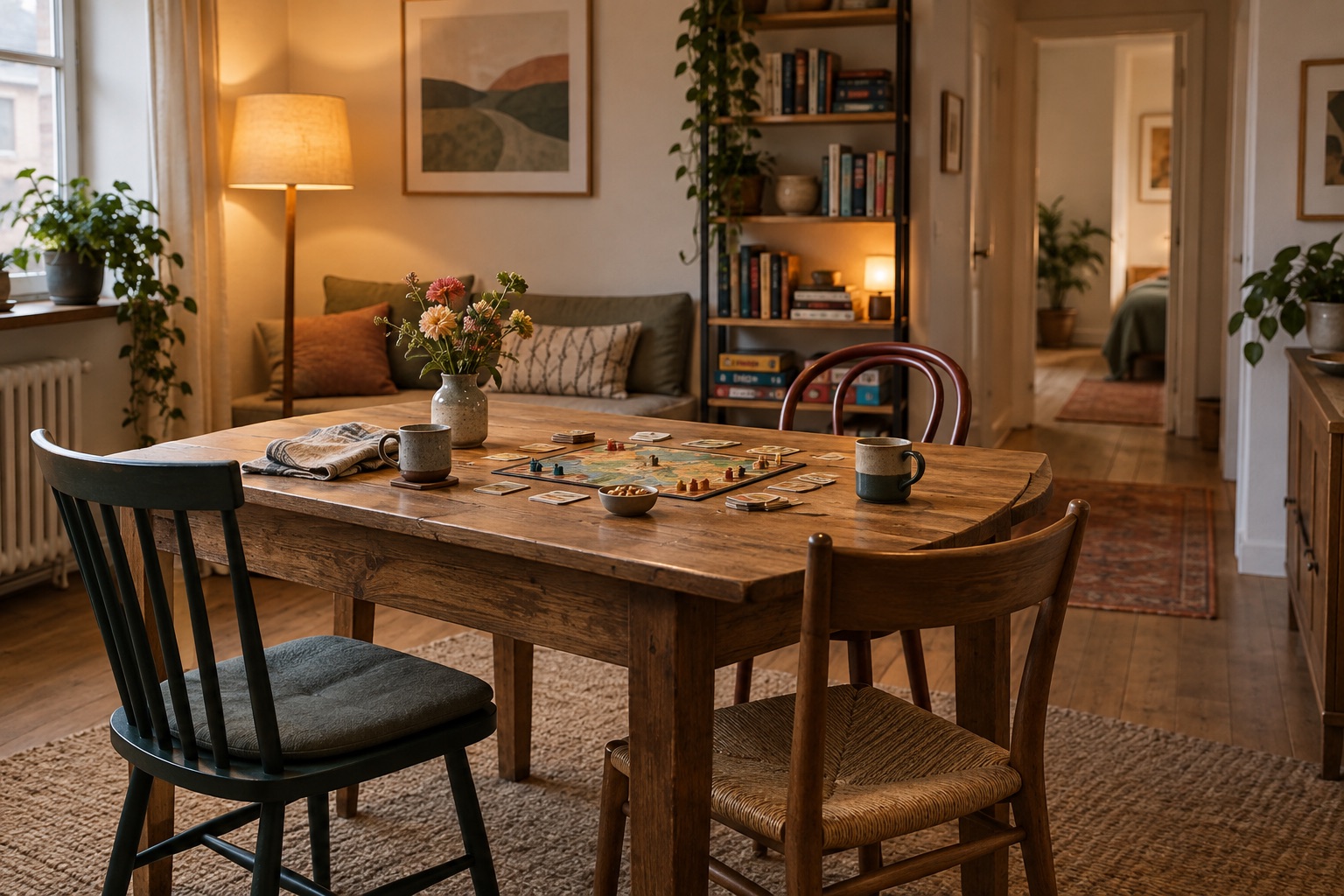
Suppose you finish a difficult course and ask two friends over on a weeknight. You have a table, but it takes twenty minutes to clear it. One chair lives in another room. The games are somewhere behind the winter coats. Nothing is wrong with the decor. The room just makes a small plan feel like work.
Minorstones is a name for the small achievements and occasions people choose to mark. WGSN was discussing the term in June 2024, in a forecast about celebrating personal wins beyond traditional life milestones. It isn't a word that appeared for the first time this month. What makes it timely for a home design blog is its appearance in Sherwin-Williams Consumer Brands Group's fall 2026 trend report. The company connects game nights, hobbies, casual meals, and small celebrations with the way people arrange rooms and keep useful objects close by.
That's a forecast from design and consumer brands, not proof that every household wants to entertain more. Still, it poses a good question for your own space: what would make an ordinary get-together easier to begin?
The cover image is an AI-generated concept, not a photograph of a completed home project.
Give the occasion a place to happen
Start with one activity you actually do or would like to do. A puzzle with one friend needs a stable surface and light you can see by. A casual meal needs seats and a place to put serving dishes. A shared craft session needs a surface you can clean. These are different briefs, even if all three happen in the same living room.
Write the activity in plain language: "I want to sit with two friends, play a board game, and leave the table usable afterward." That is more useful than asking for a "social living room." It lets you see what the present room already does well and where it gets in the way.
If you have a small living room, you probably don't need to dedicate a permanent corner to every possible occasion. The small living room layout guide shows ways to keep circulation clear while using flexible pieces. For minorstones, the best arrangement may be the one that can switch between an ordinary Tuesday and a visit without moving heavy furniture.
Make the main surface easy to recover
The table is often the bottleneck. It may hold mail, a laptop, candles, remote controls, and whatever came home in your hands. Adding a larger table won't help if its new area fills up the same way.
Look at where those everyday things could go. A tray can collect small items so you move them together. A nearby shelf or closed box can hold the game you reach for most. If the table is also your desk, decide where the work can go when a guest arrives. You don't need an empty, staged tabletop all week. You need a way to clear enough of it when you want to use it.
Check the table's real job before buying anything. A small round coffee table might be fine for drinks and poor for a board game with pieces, cards, and snacks. A dining table may be the better play surface even if the living room looks more inviting in a photo. Try the activity on the furniture you own. The awkward part will usually become obvious without a redesign.
Keep the storage close enough that setting up is easy, but avoid placing loose objects where they block a doorway or walking route. "Within reach" is useful only if the room still works when people arrive.
Let an extra person sit down
An additional seat need not be a matching armchair. A dining chair can move over for game night and return after. A small bench can hold a bag on ordinary days and seat someone when needed. If a chair feels comfortable only for five minutes, use it as occasional seating and keep the longest sitting places for people who need them.
Arrange the seats for the chosen activity. Watching a film, talking over a meal, and playing cards pull people toward different focal points. A beautiful conversation circle can leave everyone twisting to reach the table. Move the chairs temporarily and rehearse the setup before deciding that the whole room needs new furniture.
Lighting deserves the same test. The lamp that makes a corner cozy may leave the game board in shadow. A portable lamp or an existing overhead light can help for the activity, then give way to softer light afterward. Keep cords out of the path and check that a movable lamp is stable where you put it.
Use AI to compare arrangements in your room
DwellShift AI Interior Design lets you upload a room photo and describe a direction to explore. For this question, keep the brief about use, not a fashionable label. The example below is hypothetical; replace the furniture and constraints with what is in your photo.
Use my living room photo as the base. Keep the sofa, window, doorway, floor, and the current table. Show a layout for three people to sit around the table for a board game. Try moving the dining chair into the living area and put frequently used games on reachable storage. Keep a clear route from the doorway. Show practical light over the table without removing the existing floor lamp or changing the room's proportions.
Review the generated image beside the source photo. Did the model leave space for knees around the table? Can the dining chair actually move into that position? Did it invent a wider doorway or remove the radiator? A convincing picture cannot verify those details. Measure the room and try moving the real chair before ordering new furniture.
If one arrangement looks promising, test a single revision. Ask for the same room with the extra chair on the other side of the table, or with a smaller storage piece. Keeping the comparison narrow will tell you more than generating a different room each time. The room-photo workflow explains how to set constraints and spot drift in AI concepts.
Keep the change as small as the occasion
You can mark a minorstone without building a permanent party room. Clear the table, move one chair, put the game where you can find it, and adjust the light. If the setup works but feels cramped, you now know which part of the room deserves attention. It might be the table, the seat, or the storage, rather than the color on the walls.
Try the arrangement once with what you own. The best evidence is how easily you can set up, use the room, and put it back afterward.
From reading to reimagining
Explore these ideas in your own space
Find a tool for the next step in your project.