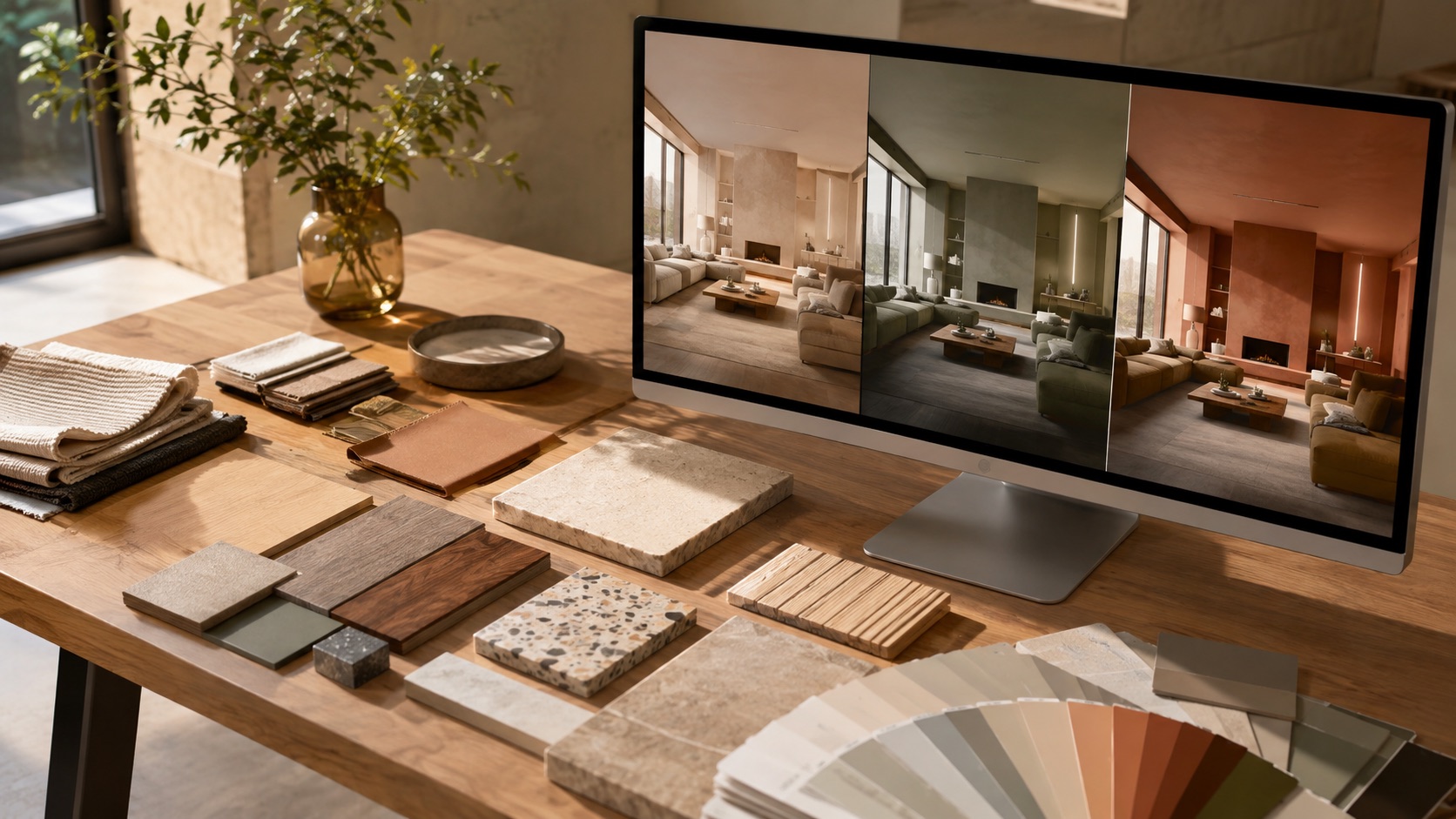

AI Style Transfer for Interior Designers
A practical style transfer workflow for designers who want to translate a client's reference image without copying it or losing the actual room.
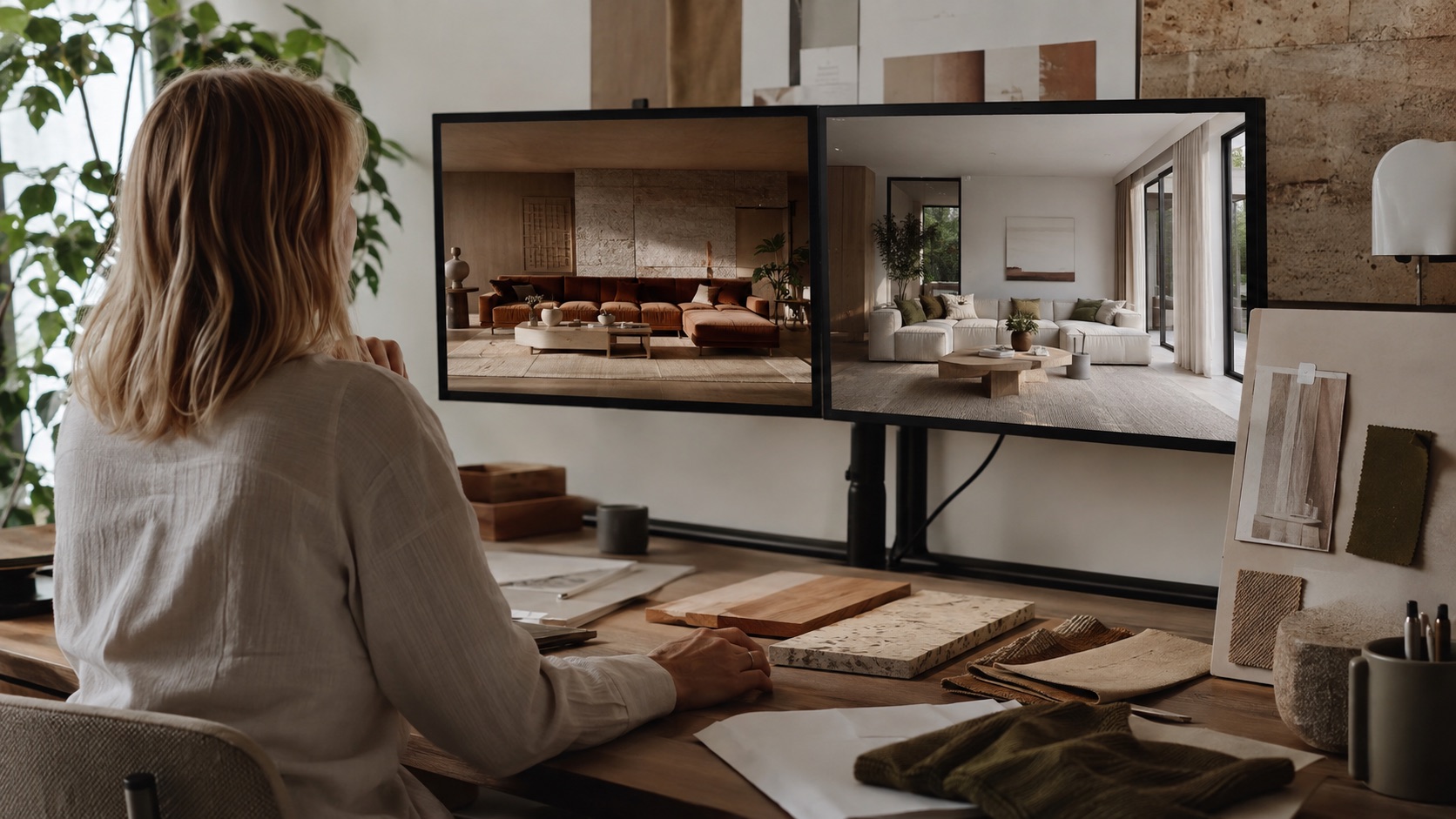
Clients rarely arrive with a clean design brief. They arrive with saved rooms. One image has the right calmness, another has the right timber, and a third has a sofa they dislike but cannot stop looking at. The designer's task is not to reproduce the references. It is to discover the values hidden inside them.
DwellShift's AI Interior Style Transfer tool can help make that translation visible. Pair a photograph of the project room with a reference, control how strongly the reference influences the result, and use the output to discuss what belongs in this project. Place this specialist exercise inside the broader AI interior design workflow so the selected direction returns to measured design information.
Begin with an image interview
Do not ask only, “What do you like about this?” The answer is often “the feeling.” Help the client make that feeling more specific.
Ask:
- Is it the amount of contrast or the actual colors?
- Do you like the material palette or the room's architecture?
- Is the appeal in softness, order, age, craft, or visual quiet?
- Would the image still work for you without its furniture?
- Which part would you be disappointed to lose?
- Which part would be wrong for your daily life?
Write the answers beside the image. A reference that looked like “modern organic” may turn out to mean low contrast, visible timber grain, rounded furniture, and no cold white light. Those qualities are easier to adapt than a style label.
Check that the reference is suitable
Choose an image the client or practice is entitled to use within the project. Avoid asking the system to copy a named designer's signature work or reproduce distinctive protected elements. The professional aim is translation, not imitation.
The AIA's AI Firm Toolkit includes intellectual property and recognition of professional contributions among the issues firms should address in AI policy. A practical studio rule is simple: extract qualities, recombine them for the brief, and keep authorship and source context visible in internal research.
A suitable reference also shows the qualities you intend to study. If the client cares about material, choose an image where surfaces are legible. If they care about atmosphere, choose one with a credible light condition. A tightly cropped decorative corner may not guide a whole-room proposal.
Prepare the project image
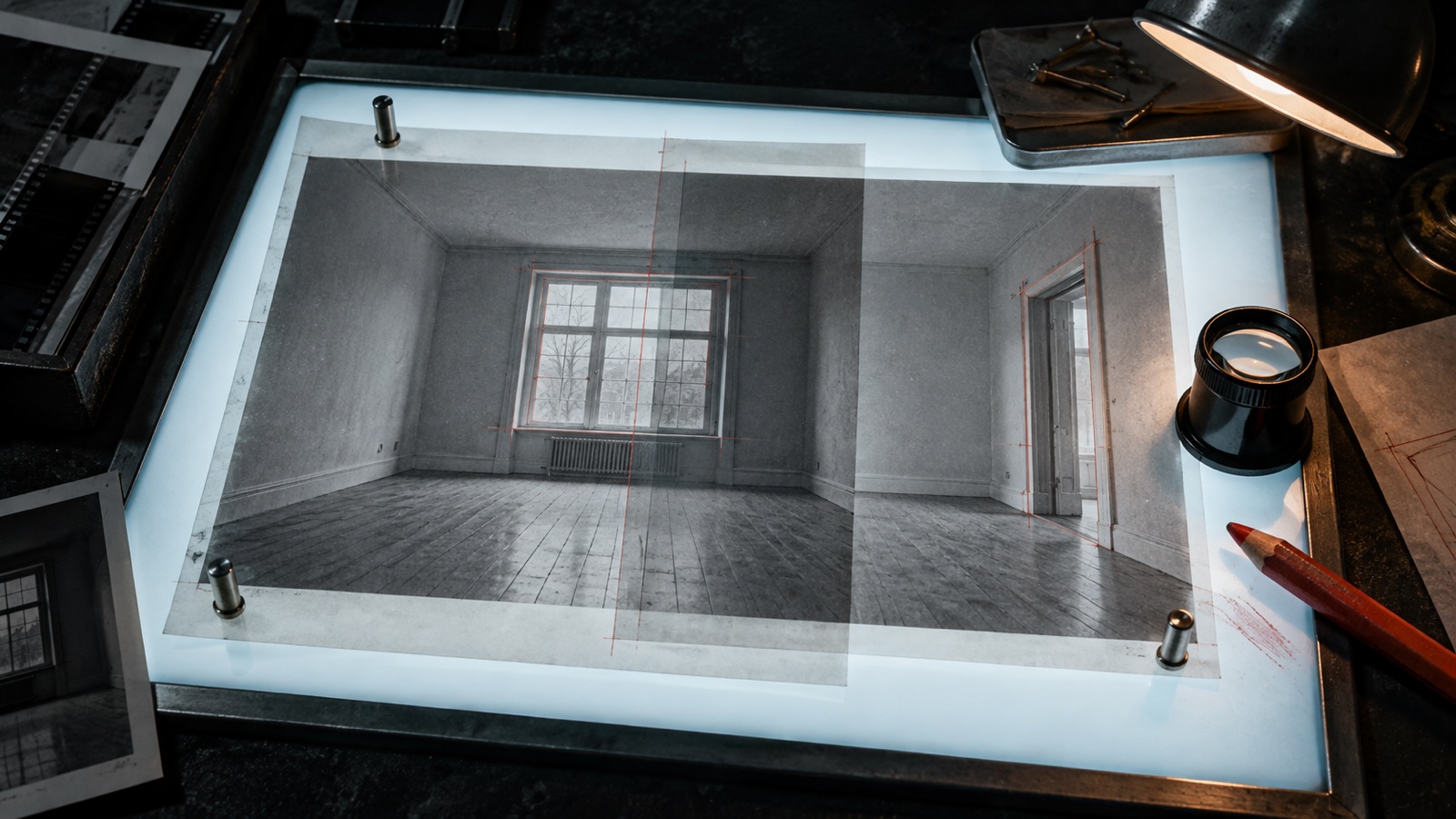
Use a clear photograph that shows the actual room structure, main openings, floor, ceiling, and fixed features. The closer the source view is to the decision under discussion, the more useful the comparison becomes.
Before upload, remove or crop personal documents, family photographs, addresses, and unrelated identifying information where possible. Check the client agreement and practice policy. DwellShift stores uploads and completed results privately with the user's account, but the practice remains responsible for deciding what project information may be used.
For capture and source-image checks, the photo-to-design guide gives a fuller audit.
Translate the reference into five design instructions
Describe the reference using five layers:
- Value: light, mid-tone, dark, or high contrast.
- Temperature: warm, cool, balanced, or deliberately mixed.
- Material character: smooth, open-grain, mineral, reflective, aged, or crafted.
- Form: rectilinear, rounded, spare, layered, delicate, or substantial.
- Atmosphere: bright, enclosed, restful, theatrical, informal, or precise.
Then connect each layer to the project room. For example:
Carry the reference's warm mid-tone palette, open-grain timber, rounded upholstery, and soft daylight into the project room. Keep the existing fireplace, windows, pale floor, and camera view. Use less stone than the reference and avoid its low ceiling treatment. The result should feel quieter and more practical for family use.
This instruction makes your judgment part of the transfer. The system is not deciding what matters in the reference. You are.
Use transfer strength as a conversation tool
In DwellShift, a lower transfer strength asks the generation to retain more of the original room direction. A higher value gives the reference more influence. Color intensity separately changes how strongly the reference palette carries across.
Use three deliberate tests:
- Low influence: Does a light touch already reveal the useful material or color relationship?
- Medium influence: Can the reference shape the room without replacing its identity?
- High influence: Which qualities become excessive or spatially misleading?
The high setting is not automatically the best result. It can be diagnostic. If stronger transfer introduces the exact features the client dislikes, you have learned where the boundary lies.
Preserve Room Layout and Preserve Original Lighting indicate priorities, not guarantees. Compare the generated result with the source photo for shifted openings, altered proportions, missing fixed features, and implausible light.
Separate borrowed qualities from project decisions
After review, create two columns.
| Qualities taken from the reference | Decisions made for this project |
|---|---|
| Warm, low-contrast palette | Keep the existing pale floor to control cost |
| Visible timber grain | Use timber only on the storage wall |
| Rounded upholstery | Choose compact seating that preserves circulation |
| Soft layered light | Add wall light and low-level sources around existing wiring constraints |
This makes the design authorship visible. The project is no longer “like that room.” It has a reasoned set of decisions tied to its own users, constraints, and budget.
Watch for visual drift
Interior-specific image models still struggle with consistent geometry and style control. The RoomDiffusion research project identifies common interior generation problems including furniture duplication and inaccurate style rendering. Its paper and examples are a useful reminder that a smooth image can contain unstable design information.
In a style transfer result, check:
- whether the room gained or lost openings
- whether furniture multiplied or fused
- whether perspective and room depth shifted
- whether an attractive material has impossible seams or thickness
- whether the reference lighting contradicts the project's orientation
- whether a distinctive object was copied when only its character was needed
Reject visual errors quickly. Do not spend design time inventing a justification for them.
On renovation projects where the existing fabric matters, pair this review with the adaptive reuse workflow.
Convert the result into an original concept package
A useful style transfer should lead to new project material, not remain the final artifact. Develop:
- a project-specific palette with real samples
- a small set of sourced furniture or lighting references
- a plan that tests the proposed scale and circulation
- elevations that locate material transitions and joinery
- a lighting intention tied to real sources and controls
- a concise narrative explaining how the direction serves the client
The generated image may sit in the concept package as supporting visualization. The project identity should be carried by the decisions around it.
A good review question for every result
Ask: “If the reference image disappeared tomorrow, could we explain and continue this concept?”
If the answer is yes, the transfer has done its job. The team understands the palette, forms, atmosphere, and project-specific reasons. If the answer is no, the work is still dependent on resemblance rather than design intent.
Before closing the reference exercise
Use one primary reference for the transfer, even if a broader mood board helped select it. The reference can show a different room type, but a related viewpoint and clear design qualities are easier to interpret.
Write down the abstract qualities that survive the exercise, along with what changed for the brief. If the client still prefers the source, return to the image interview and identify the missing quality precisely. It may be contrast, furniture scale, light, or material density rather than the whole room.
The project should now be able to continue through original plans, sourced products, samples, and details without reproducing distinctive authorship.
Style transfer is valuable when it turns “I want this” into a conversation about why. The designer then carries that why into a room that belongs to the client and to the project.
From reading to reimagining
Explore these ideas in your own space
Find a tool for the next step in your project.