
Interior design styles: build a mix you can actually use
Interior design styles become useful when you compare shape, material, color, pattern, and formality, then write a practical recipe for your own room.
Interior design styles are most useful as a vocabulary. They help you explain why you prefer one chair, room, or material relationship over another. They become less useful when a label turns into a shopping checklist.
You do not have to discover one permanent style. Most lived-in homes combine architecture, inherited objects, practical constraints, and tastes gathered at different times. The goal is to identify a dominant visual logic and decide where another influence can enter without making the room incoherent.
The DwellShift home design overview is a useful starting point when you want to move from reference images to a room-specific direction. You can also translate a style recipe into a room design study with the Agent, naming what must stay before generating.
DwellShift publishes this guide and recommends its own product. Style categories are editorial tools rather than universal standards, and many historical movements contain regional and cultural differences that a short guide cannot fully represent. We have not tested products or authenticated antiques for this article.
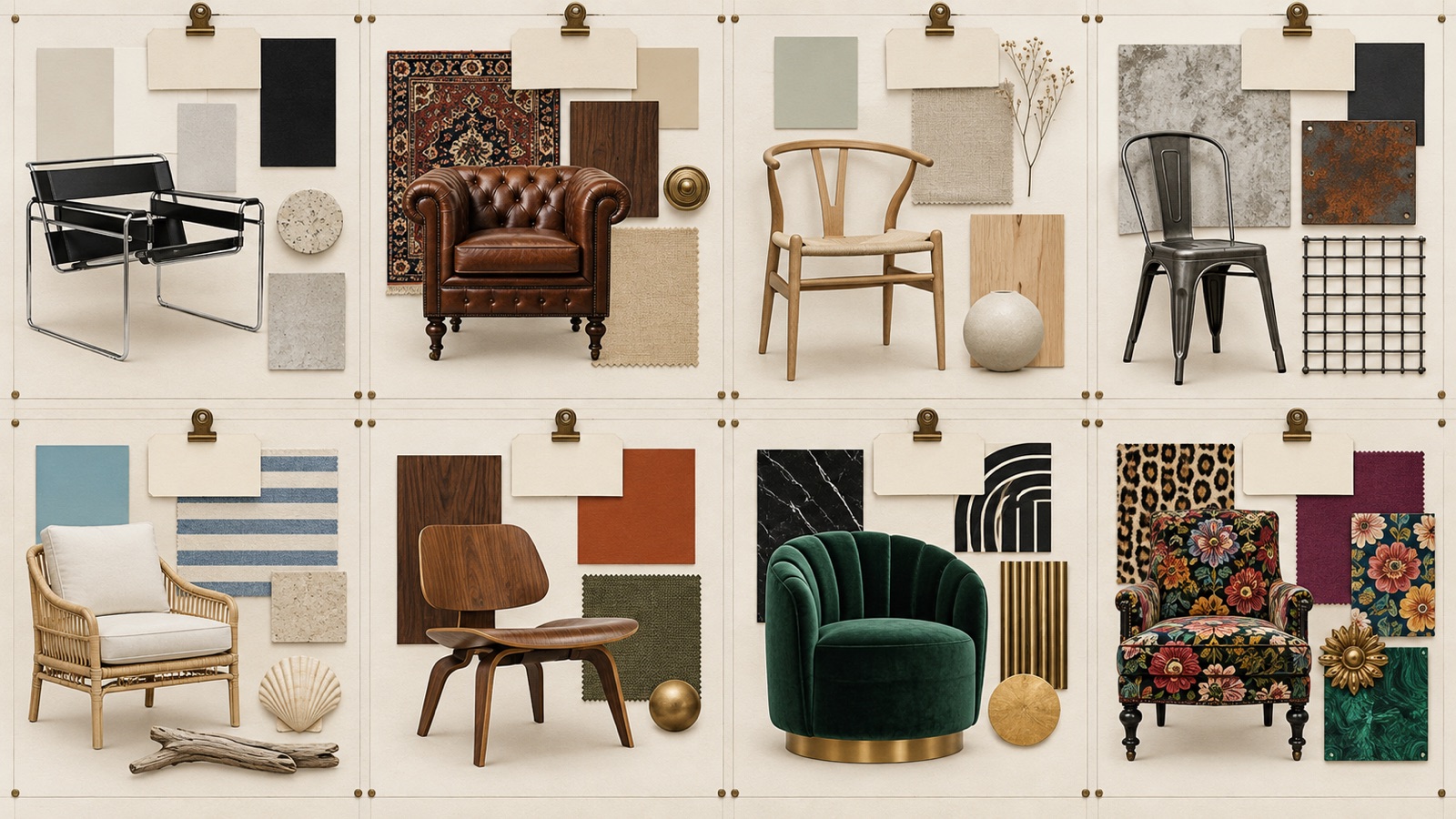
The cover is an AI-generated archive-grid image. It is not a museum catalog, product comparison, or historical evidence. AI assisted the search research, structure, and draft.
Read a style through five signals
Ignore the label for a moment and study a reference room through five signals.
| Style signal | What to notice | Useful question |
|---|---|---|
| Shape | Straight, rounded, tapered, heavy, delicate, geometric | Which silhouette repeats? |
| Material | Polished, raw, painted, woven, reflective, patinated | What gives the room its character? |
| Color | High contrast, tonal, earthy, pale, saturated, dark | Where does the strongest color sit? |
| Pattern | None, restrained, organic, graphic, layered | What scale controls the room? |
| Formality | Tailored, relaxed, symmetrical, improvised, ornate | How carefully arranged does it feel? |
This method works when a room mixes styles or when a social-media label is too vague. It also keeps the architecture and existing furniture in the conversation.
Eight useful style families
These families are not a complete history of design. They are practical reference points for describing current rooms.
Modern
Modern rooms usually favor clear geometry, functional planning, limited ornament, and materials expressed directly. Thin metal, glass, molded forms, smooth timber, and graphic contrast can all belong.
The term is often confused with contemporary. Modern design usually points toward twentieth-century movements and their descendants, while contemporary describes what is being made now.
The V&A account of Modernism describes it as a broad collection of ideas rather than one fixed style, with clean lines and reduced applied decoration among its visual effects. That history is richer than a room containing only a white sofa and black lamp.
Use modern as a dominant style when you like visual clarity and strong silhouettes. Add warmth through tactile upholstery, timber, art, and objects with age.
Traditional
Traditional rooms draw on historical furniture forms, molding, symmetry, familiar textiles, and materials that show craft or age. The label changes by place. English, American, French, Chinese, Indian, and many other traditions have different forms and cultural histories.
A practical contemporary traditional room may use one substantial wood piece, tailored curtains, a patterned rug, and a balanced furniture arrangement without recreating a period interior.
Use traditional as the base when the building has strong historic features or when comfort, continuity, and collected objects matter. Avoid mixing unrelated period motifs only because they all look old.
Scandinavian
Scandinavian interiors are often recognized through light, useful furniture, natural materials, restrained form, and an attention to daily comfort. Pale timber and soft neutrals are common, but color, painted furniture, folk pattern, and darker woods also belong to Nordic design traditions.
Use Scandinavian influence for legible forms, warmth, and practical simplicity. Keep enough texture and personal material that the room does not become a generic pale catalog.
Industrial
Industrial style exposes or references the materials of work and production: metal frames, visible brick, concrete, utilitarian lighting, workshop storage, and darker finishes.
It works best when some of those elements are genuine to the building or when a few robust pieces carry the idea. Adding fake pipes, distressed signs, and several cage lights to a standard room can turn the style into a theme.
Balance hard surfaces with acoustics, comfortable upholstery, warm light, and places the hand actually touches.
Mid-century modern
Mid-century modern commonly uses tapered or sculpted furniture, clear function, timber, color blocks, and forms developed during the middle decades of the twentieth century. The category covers many designers, countries, price levels, and materials.
Use it through proportion rather than a collection of replicas. One low credenza, an expressive chair, and a simple light may establish the language. Check whether low seating and delicate vintage construction suit the people and daily use.
Coastal
Coastal style takes cues from light, weather, water, and relaxed use rather than a pile of shells. Washed or painted timber, woven fibers, linen, blue or green accents, and an airy palette can support the direction.
The specific coast matters. A Mediterranean room, New England cottage, Australian beach house, and tropical home should not collapse into the same blue-and-white package.
Use the local light, materials, and architecture as the guide. Keep nautical symbols rare unless they are personally meaningful.
Art Deco
Art Deco combines geometry, luxury, new manufacturing, historical references, and dramatic surfaces in many different regional forms. Lacquer, metal, glass, veneer, saturated color, stepped shapes, and symmetry can signal the style.
The V&A introduction to Art Deco explains that it drew from many movements and sources rather than operating as one pure style. That makes selective use more convincing than buying a matching set of fan motifs.
Use one or two strong elements: a geometric rug, curved cabinet, reflective light, or deep color. Let quieter pieces prevent the room from becoming a stage set.
Maximalist
Maximalist rooms use color, pattern, collections, and visual density deliberately. The style is not the same as leaving every object visible.
Successful versions repeat colors, control pattern scale, group collections, and maintain usable surfaces. One dominant palette or shape can connect objects from different periods.
Use maximalism when visible belongings bring pleasure and the household can maintain the display. Closed storage still matters because contrast between density and rest keeps the room readable.
Choose a dominant language, then one supporting influence
Start with the architecture and the largest things you already own. A room with original molding, a dark wood table, and a patterned rug may naturally support a traditional base. A concrete apartment with large glazing and a low modular sofa may support modern or industrial forms.
Write a short recipe rather than a style name:
Clear modern shapes, warm oak, cream and deep green, one traditional patterned textile, brushed metal, low visual clutter, and two pieces of colorful art.
This recipe tells you more than "modern traditional." It identifies shape, material, color, pattern, and density.
Let the dominant language control architecture, large furniture, and the main material family. Let the supporting influence enter through lighting, art, rugs, occasional furniture, or one finish. A roughly 80/20 relationship can be a useful starting thought, but it is not a rule or a measurement target.
Separate style from room performance
A style label does not answer whether the sofa is comfortable, the route is clear, the curtain blocks light, or the finish can handle water.
Solve those needs first. Then choose an expression that supports them. A minimalist room still needs storage. An industrial kitchen still needs appropriate extraction. A traditional bathroom still needs reliable waterproofing. A maximalist bedroom still needs a calm nighttime routine.
If a strong all-over color is part of the recipe, the color drenching guide helps test how walls, trim, and ceiling interact. If Japandi is the reference, the Japandi style guide separates material restraint and empty space from a generic beige furniture bundle.
Build a reference set that has a job
Collect six to ten images, then annotate why each is present. One may show furniture shape, another color, another lighting, and another material. Remove images that repeat the same point.
Include at least one room similar in size and architecture to yours. A dramatic loft, coastal villa, or historic townhouse may offer a useful color idea while being a poor model for proportion.
The reference-led style transfer workflow explains how to separate source features from the target room. Preserve openings, scale, and fixed elements instead of asking the image to become the reference wholesale.
Test the recipe, not the label
Use a source photo and a constrained brief:
Keep the room dimensions, windows, oak floor, sofa, bookcase, and camera view. Apply clear modern shapes, cream and deep green, one traditional patterned rug, brushed metal lighting, and colorful art. Keep the room lived-in. Do not add architectural molding or replace protected furniture.
Ask for options before generation if the dominant and supporting influences are still unclear. After generation, identify which signal changed: shape, material, color, pattern, or formality. Reject a result that changes the architecture or adds a collection of style clichés.
The guide to avoiding generic AI room design is useful when every named style produces the same pale sofa, slatted cabinet, and anonymous artwork.
Interior design styles should make decisions easier, not police the room. Read the signals, choose a dominant language, add one supporting influence, and write a recipe tied to the space you own. When the recipe is specific enough to test, open a style study in a new project.
From reading to reimagining
Explore these ideas in your own space
Find a tool for the next step in your project.