
How to design a Japandi living room without making it sterile
Build a calm Japandi living room through proportion, useful simplicity, natural materials, and contrast rather than beige decor alone.
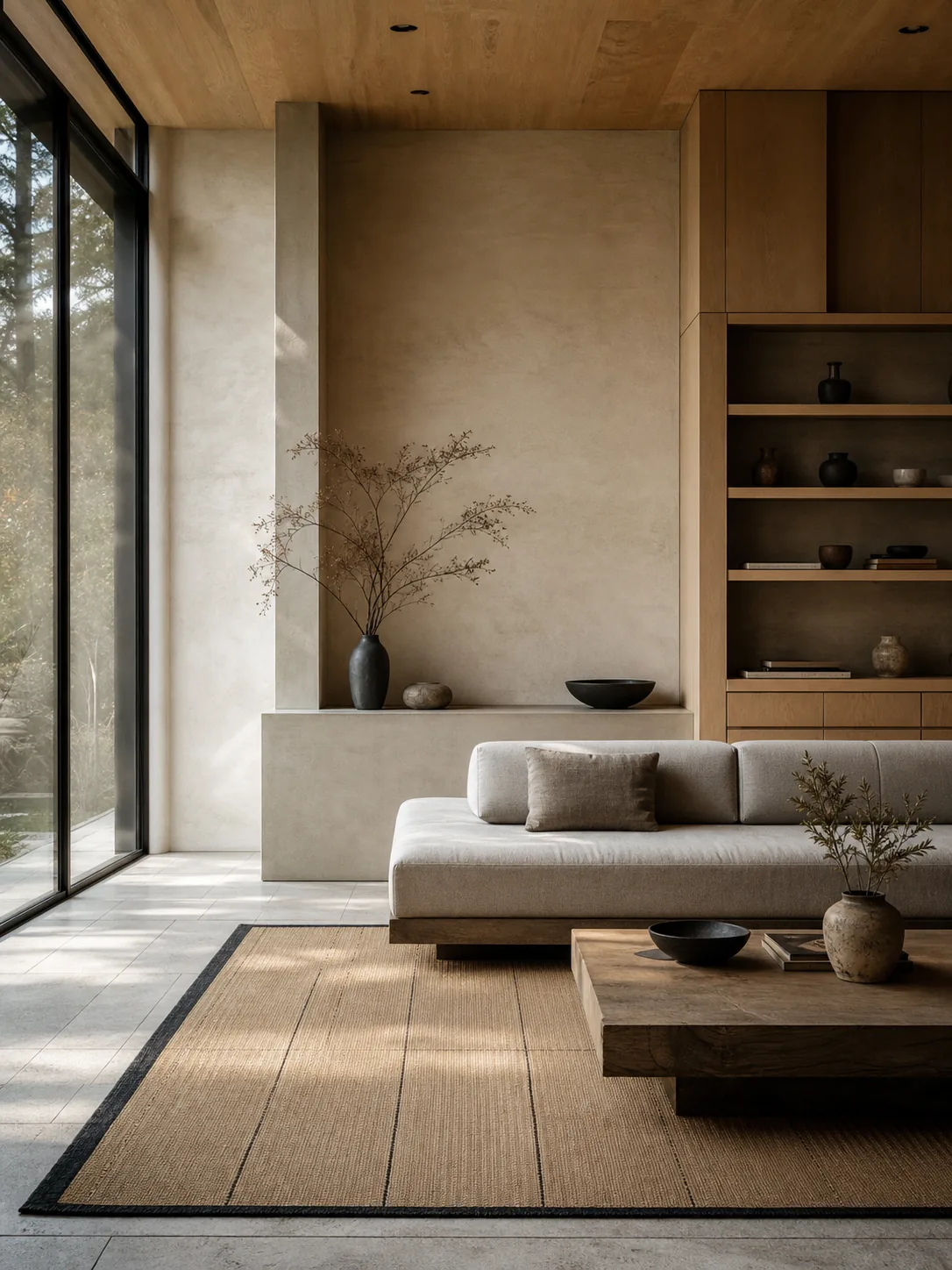
A pale sofa, slatted console, and paper lantern can produce a room that looks vaguely Japandi in a shopping cart. Put them together at home and the result may feel more like a furniture showroom than a place to live.
Japandi works when the room has been edited as a whole. The appeal comes from useful objects, calm proportions, tactile materials, and enough empty space to notice them. Beige is optional. Restraint is not.
Decide which side of Japandi leads
Japandi brings Japanese and Scandinavian design ideas into the same room, but the blend does not need to be exactly equal.
A Scandinavian-leaning room may have lighter woods, softer upholstery, familiar mid-century shapes, and a little more casual layering. A Japanese-leaning room may sit lower, use stronger dark accents, reveal more asymmetry, and give greater emphasis to shadow and negative space.
Choose the direction that suits the architecture you already have. A bright apartment with pale floors does not need a set of dark faux beams to prove its Japanese influence. A room with deep wood trim does not need to be bleached into a Nordic photo.
Write down the qualities you want before naming products. For example: low, quiet, warm, textured. Four precise words are more useful than a long mood-board vocabulary that permits almost anything.
Edit the floor plan first
The style becomes convincing when the room can breathe. Start by removing the pieces that interrupt movement or duplicate a job.
One generous coffee table may be calmer than three tiny tables. A low cabinet that holds daily clutter will do more for the room than open shelving filled with newly purchased ceramics. Seating should relate to the people using it, not line the walls as separate display objects.
Low furniture is common in Japandi interiors because it keeps long sight lines and gives walls, windows, and shadows more presence. It is not suitable for everyone. If a low sofa is uncomfortable to stand up from, choose a higher seat with a simple frame. A style that ignores the body is only a photograph.
Keep the path through the room direct. Leave a patch of floor or an unfilled corner where the eye can rest. This empty area has a job, so resist the urge to complete it with another basket or plant stand.
In a compact room, use the small living room layout method to protect that open space before selecting low-profile furniture.
Build one material family
Natural-looking materials are central to the style, yet mixing every woven and wooden surface at once makes the room noisy. Choose a short material family and repeat it with restraint.
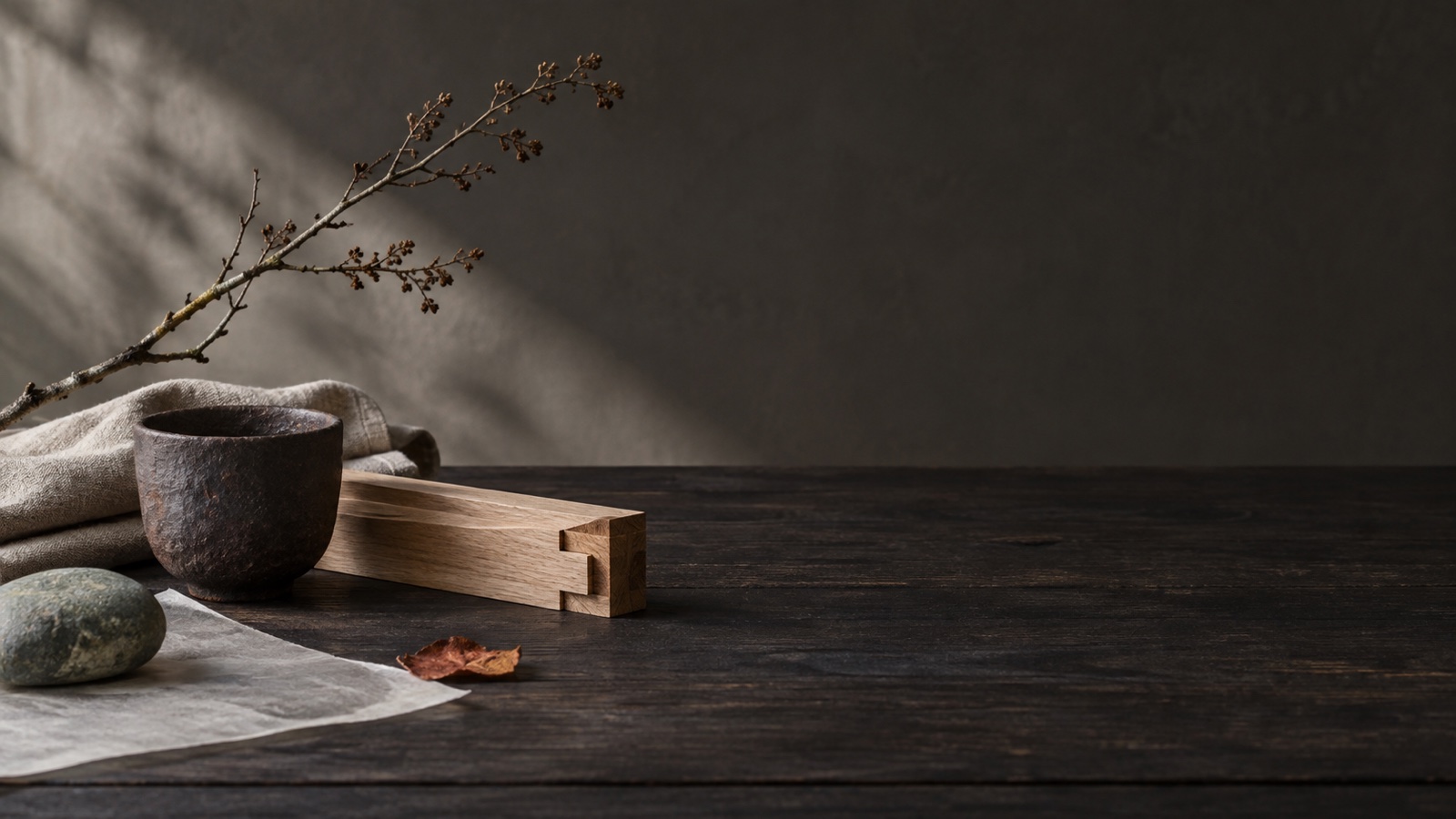
You might pair pale oak with warm white plaster, wool, and one blackened metal detail. Another room could use walnut, linen, handmade tile, and aged brass. The exact list matters less than the relationship among undertones and textures.
Lay wood samples beside the floor in daylight. Pale oak can read pink, gray, or yellow depending on its finish. A table, media unit, and floor do not need to match, but they should look as though they were introduced on purpose. When several woods compete, use one as the dominant tone and let the others appear in smaller amounts.
Texture supplies much of the interest that pattern would carry in a busier room. Look closely at linen weave, wool pile, paper fibers, matte ceramics, and wood grain. Synthetic materials can still belong if their surface and construction suit the room. The label matters less than whether the material looks and feels honest in context.
Use a quiet palette with real contrast
The common all-beige version of Japandi can turn flat under ordinary household lighting. Calm rooms still need edges.
Start with the room's permanent colors: floor, stone, window frames, and large built-ins. Add a warm or muted wall color that relates to them. Then introduce a darker note through a lamp, table base, timber frame, or single piece of art. The contrast helps define shapes without filling the room with color changes.
Muted greens, clay reds, soot-like blues, and brown-black accents can all work. Use them because they connect to the material story, not because a trend forecast named them. A moss-colored cushion near a garden view makes more sense than five unrelated olive accessories bought as a set.
Test paint next to wood, fabric, and flooring at different times of day. Neutral colors are particularly sensitive to changing light. The cream that feels soft in the morning may look muddy beside a cool gray floor at dusk.
For a more immersive version of the same palette, the color drenching guide explains how walls, trim, doors, and ceilings can share one hue without losing all definition.
Let useful objects carry the detail
Japandi rooms do not need to be empty, and they should not look unoccupied. They benefit from fewer objects with clearer reasons for being there.
A reading lamp belongs because someone reads in that chair. A shallow bowl may hold keys. A textile can soften sound as well as add color. Books, records, and plants bring evidence of use without requiring a decorative theme.
Display objects at different densities. A single branch in a substantial vessel may suit one surface, while a shelf of well-used books can remain full. If every ledge has one ceramic object placed dead center, the restraint starts to feel staged.
Craft is another source of character. Small variations in glaze, grain, joinery, or weave keep a limited palette from feeling generic. You do not need to replace ordinary possessions with expensive handmade versions. Begin with what you already use and allow new pieces to arrive slowly.
Patina helps. A scratched wooden stool that has served several rooms may contribute more warmth than a flawless decor object designed to look artisanal.
Soften the room without piling on textiles
Comfort comes from more than cushions. Consider the depth of the sofa, the support of the chair, the temperature of the light, and the way sound behaves in the room.
One large rug can connect seating and reduce echo. Curtains can filter hard daylight while adding a long, quiet texture. A wool throw can make a low-profile sofa feel less severe. Stop when the room is comfortable. A mound of coordinated pillows works against the clarity that made the style appealing in the first place.
For lighting, use warm pools rather than asking one bright ceiling fitting to flatten the entire room. A paper shade, a small shaded lamp, and light washing a textured wall can create depth after sunset. Make sure reading and other tasks still receive enough light. Atmosphere should not make the room difficult to use.
Avoid the Japandi costume
Some details have become shorthand for the style: vertical slats, boucle upholstery, fluted wood, paper lanterns, irregular ceramics. Any one of them can be right. Using all of them together often makes the room look assembled from a search results page.
Be especially cautious with decorative slat walls. They change the scale of a surface, collect dust, and can compete with existing doors or trim. If the architecture does not need the extra rhythm, a plain wall with good art may be stronger.
The same applies to replacement. Japandi does not require discarding a comfortable sofa because its legs are wrong. Try simplifying the objects around it, changing the rug, or refinishing a nearby cabinet first. The most responsible version of a restrained interior buys less.
Preview the direction before committing
A style preview can show whether the room wants pale Scandinavian warmth or a darker Japanese influence. With home design style transfer, use a straight, well-lit photograph and request that doors, windows, and major furniture positions remain unchanged. Compare versions that vary one material or color decision rather than regenerating the entire room each time.
An AI interior design concept is useful for mood and material relationships. It is not evidence that a particular sofa will fit or that a wall can be altered. Keep the original photograph beside every generated image and note what the concept has quietly moved, enlarged, or erased.
The winning concept is not necessarily the prettiest image. Choose the one whose ideas survive contact with the real room.
Questions people ask about Japandi living rooms
What colors are used in Japandi interiors?
Warm whites, soft grays, wood tones, muted earth colors, and dark accents are common. The stronger principle is a controlled palette tied to natural-looking materials. A Japandi room can include color without losing its calm.
Can Japandi work with dark furniture?
Yes. Dark timber or upholstery can provide useful weight and contrast. Give it room, repeat the tone once or twice in smaller details, and avoid surrounding it with many unrelated dark pieces.
Is Japandi the same as minimalism?
They overlap in editing and clarity. Japandi usually places more emphasis on natural materials, craft, warmth, and the beauty of imperfect or aged surfaces. It can feel lived-in without becoming cluttered.
How do I make Japandi feel cozy?
Improve physical comfort first: supportive seating, a pleasant rug underfoot, filtered daylight, and several well-placed evening lights. Texture and personal objects can then add warmth without crowding the room.
Do all the wood tones need to match?
No. Keep their undertones compatible and establish a dominant wood. Use contrast intentionally, such as a dark side table against a pale oak floor, instead of collecting several almost-matching finishes.
From reading to reimagining
Explore these ideas in your own space
Find a tool for the next step in your project.