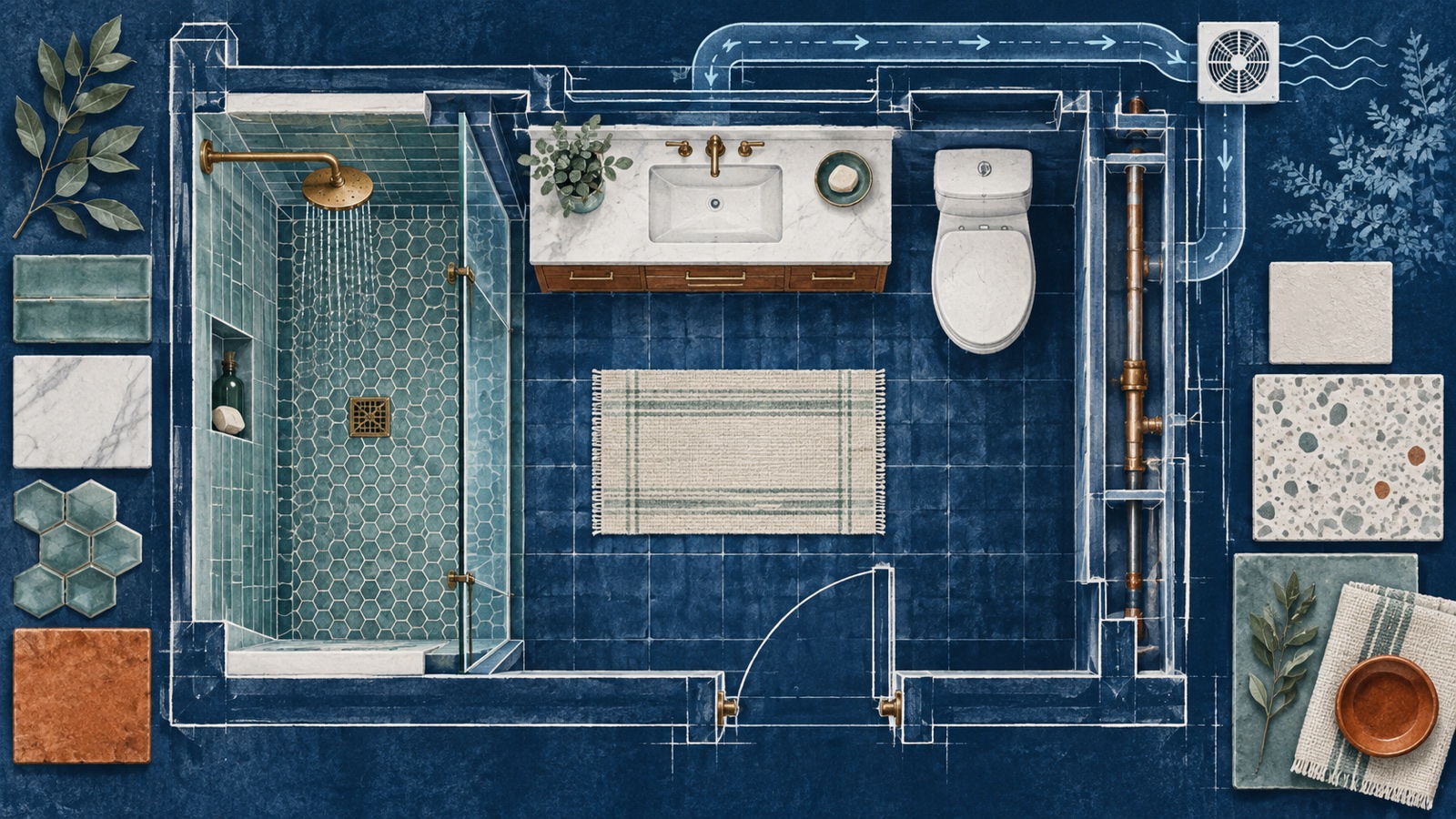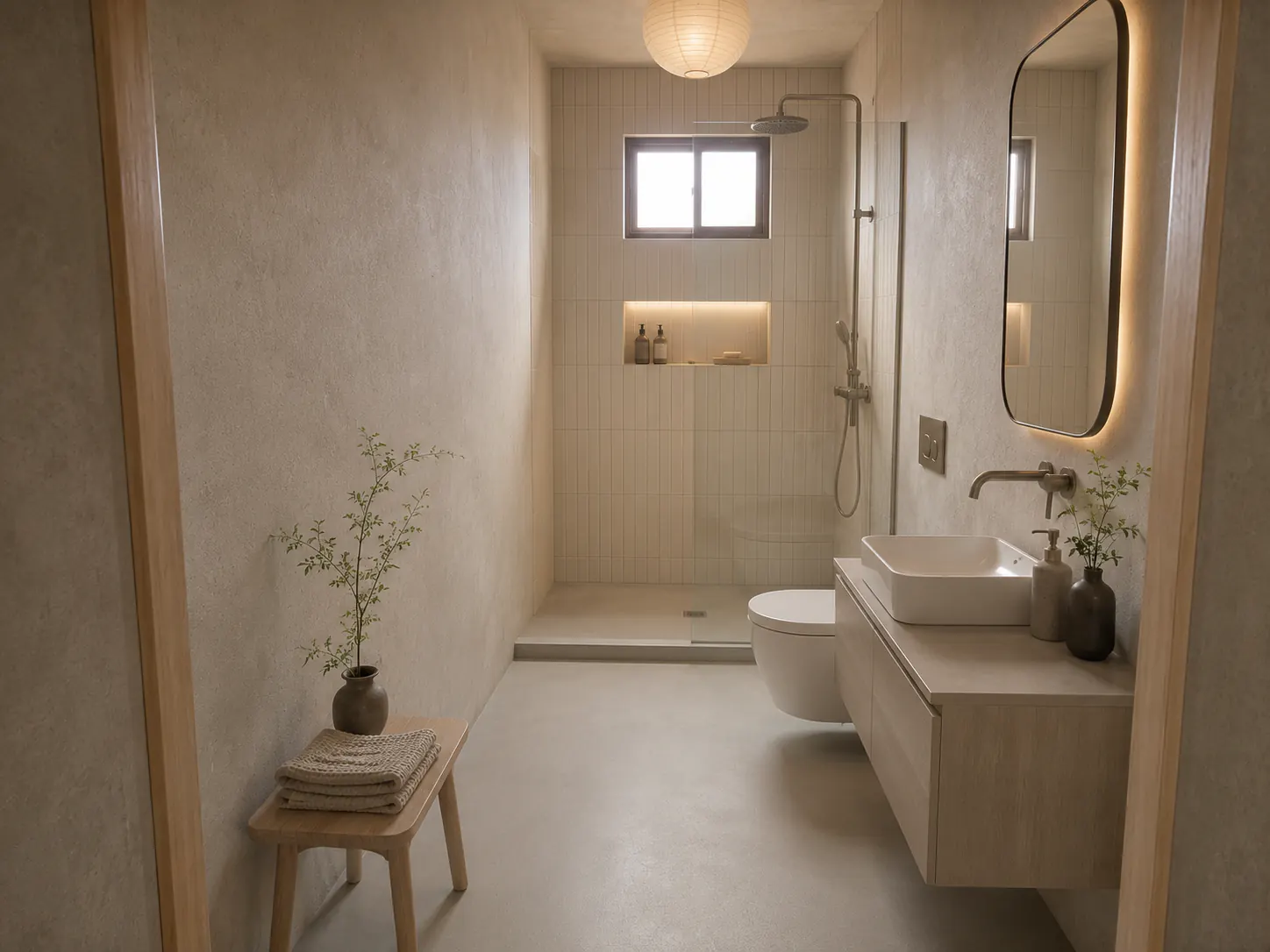

Small bathroom ideas without moving the plumbing
Small bathroom ideas can improve storage, light, color, privacy, and cleaning without pretending every compact room needs a full layout change.
The most realistic small bathroom ideas often keep the toilet, basin, tub or shower, and door exactly where they are. A better mirror, useful light, shallower storage, a controlled material palette, and a place for wet towels can change the room without turning it into a full reconfiguration.
This guide is for a bathroom whose basic fixtures work and whose visible condition is sound. Leaks, persistent damp, loose finishes, unsafe wiring, failed extraction, or damaged wet-area assemblies need investigation rather than decoration.
DwellShift's photo-led home design experience can help you understand how an existing room photo becomes the base for a visual direction. For a compact bathroom, you can preview one no-plumbing room design change while explicitly keeping every fixture and opening in place.
DwellShift publishes this guide and recommends its own product. We have not inspected a bathroom or tested materials, fixtures, coatings, electrical products, ventilation, or waterproofing for this article. Confirm suitability, installation, local rules, and hidden conditions with the appropriate qualified professionals.
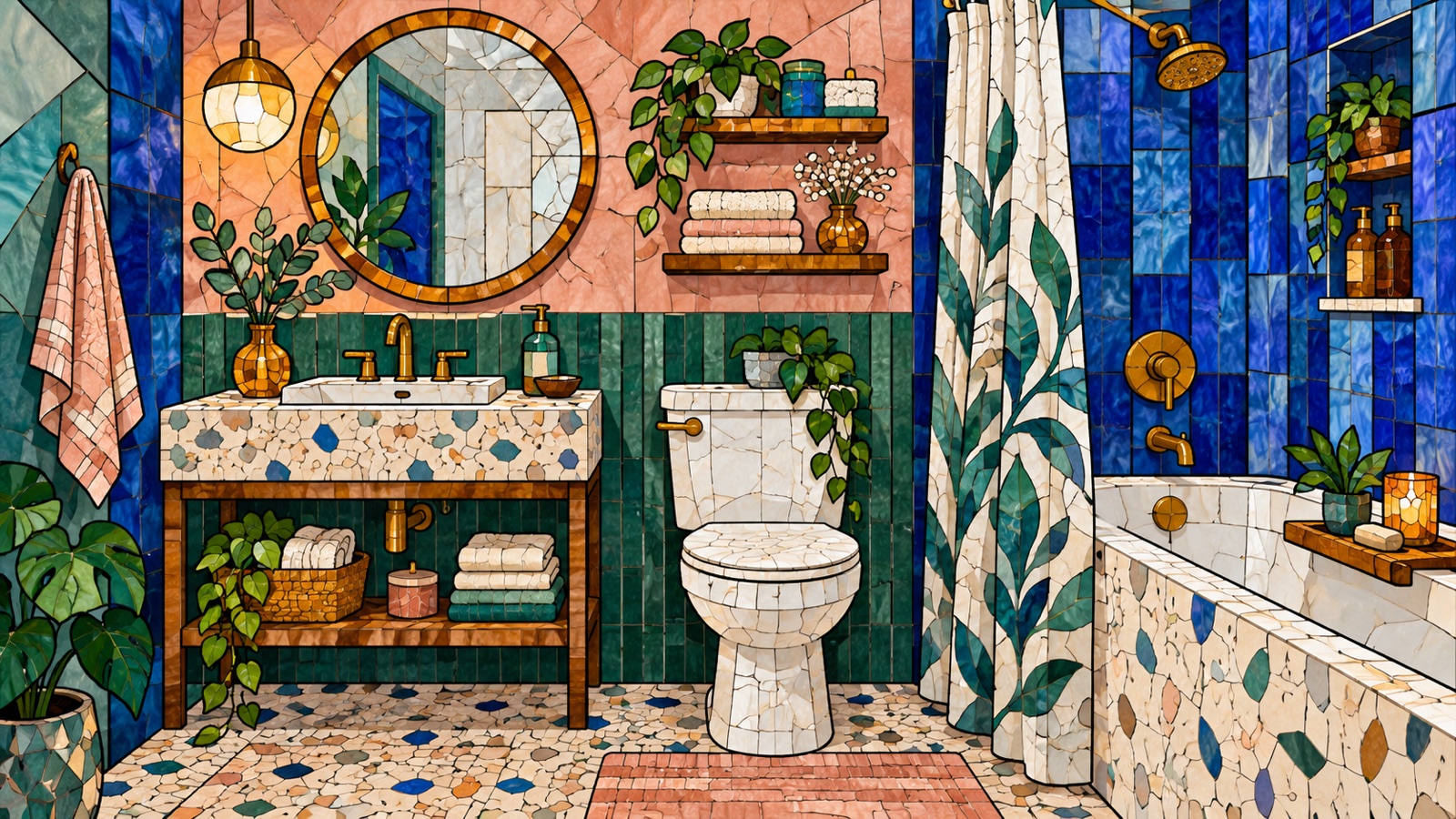
The cover is an AI-generated stained-glass-style illustration. It is not a photograph, material sample, waterproofing detail, or measured plan. AI assisted the search research, structure, and draft.
Decide whether the room is suitable for a light-touch update
Before choosing color, check what the room is telling you.
| Condition check | Light-touch idea may be suitable | Stop and investigate |
|---|---|---|
| Water | Surfaces dry normally after use | Recurring leak, swelling, staining, or soft substrate |
| Ventilation | Moisture clears and the fan exhausts appropriately | Persistent condensation, mold, or unknown exhaust route |
| Electricity | Existing fittings are sound and suitable | Damaged fitting, unsafe location, or uncertain wiring |
| Fixtures | Toilet, basin, tub or shower operate correctly | Movement, cracks, drainage problems, or failing seals |
| Surfaces | Finish is stable and can be prepared | Loose tile, crumbling grout, peeling caused by moisture |
The U.S. EPA bathroom remodeling guidance emphasizes moisture removal, outdoor exhaust, leak repair, and water-resistant assemblies. A fan that makes noise is not automatically a functioning ventilation system.
If the room needs more than a refresh, use the bathroom remodel scope guide to distinguish fixture replacement, same-footprint work, and reconfiguration.
1. Clear the floor before adding storage
Small bathrooms feel more difficult when the floor is interrupted by bins, scales, spare products, and furniture that does not fit the wall.
Remove everything that can leave the room, then return only daily items. Give laundry, spare toilet paper, cleaning products, and refills a specific location. Check child and pet safety where relevant.
One wall-mounted or wall-hugging storage piece may work better than several baskets. A surface-mounted mirrored cabinet can combine face-level storage and reflection without opening a wall. A shallow shelf above a door or toilet may hold light, infrequent items, provided it is securely installed and does not create a hazard.
Measure projection, not only width. A cabinet that appears narrow from the front can crowd the room because it is too deep.
2. Replace visual fragments with one larger move
Many compact bathrooms contain several tiny organizers, mats, frames, and color accents. Removing some of them can make the room easier to read.
Choose one larger visual move: a generous mirror, one shower curtain with a clear pattern, a full wall color, a continuous row of hooks, or a single closed cabinet. Let it organize the smaller objects around it.
A larger mirror can reflect light and create a stronger composition, but it should not hide required access or place delicate edges where they are likely to be hit. Check mounting, wall construction, weight, and the positions of lights, outlets, and taps.
3. Give the basin a dry landing area
A small basin quickly becomes unusable when soap, toothbrushes, cosmetics, and hair tools occupy every edge.
Move daily items into a mirrored cabinet, shallow drawer, wall cup, or one tray sized to leave a dry area. Keep electrical tools away from water and follow product and local safety requirements.
If the vanity has doors, inspect the interior around pipes. A shelf cut around plumbing may provide less useful capacity than expected. Drawer organizers should match the objects rather than create many empty compartments.
Do not add open shelves simply because the wall is available. Toiletries, labels, and cleaning products create visual noise. Conceal most supplies, then keep one small surface easy to wipe.
4. Light the face and the room separately
A bright ceiling light can leave the face in shadow. A decorative light above the mirror can still glare if the lamp is visible or reflected directly.
Review the existing light from standing and seated positions. A suitable mirror light may improve grooming, while a softer general source makes the full room legible. A low nighttime light can help the route when safely selected and positioned.
Bathroom electrical zones, fixture ratings, controls, and installation vary by location. Use qualified help for hardwired changes. If replacing a lamp or shade within the existing approved fitting is permitted, follow the manufacturer's limits and keep the source protected from moisture as required.
5. Use paint where paint belongs
Color can connect a chopped-up bathroom without changing fixtures. A warm off-white may soften contrast. Deep green or blue can make white fixtures feel deliberate. A related wall and ceiling color can reduce visual edges.
Paint is not a substitute for a sound wet-area finish. Confirm the substrate, preparation, ventilation, and product suitability. Do not paint over active moisture, loose material, or a surface the coating is not designed to cover.
Test a large sample beside the fixed tile, sanitaryware, floor, and metal. The existing white may be blue, gray, or cream. A new wall color that ignores that undertone can make the fixtures look more dated.
6. Change the shower curtain before changing the shower
Where a curtain is appropriate, it occupies a large part of the view and can change the room quickly. Choose a size that contains water, dries properly, and does not drag on the floor. The liner, rod, rings, and washing routine matter as much as the pattern.
A plain curtain can quiet busy tile. A strong stripe or botanical pattern can give a plain room one point of view. Hang height affects proportion, but the setup still has to operate and contain water.
Replacing a screen, converting a tub, or creating an open shower moves beyond simple decoration. Those changes can affect fixing, waterproofing, drainage, and water containment.
7. Make towels part of the ventilation plan
Hooks fit narrow walls, but tightly bunched towels may dry slowly. Bars need more width but spread fabric. A rail on the back of a door may work only if the towel clears the wall and the door remains safe to operate.
Observe how many towels are used and where wet fabric currently lands. Give each regular user a clear location. Keep the arrangement away from direct splash where possible and make sure air can move around the textile.
Decorative towels do not solve a drying problem. Fewer towels in active rotation, a reliable laundry routine, and effective ventilation may matter more than another rail.
8. Reduce grout contrast before replacing tile
Grout can make a wall read as one surface or many small units. Cleaning or repairing appropriate grout may improve the room, but discoloration can also signal moisture or material problems that need diagnosis.
Do not apply a cosmetic product over unsound joints or an active failure. Confirm the right cleaning and repair approach for the tile, grout, sealant, and wet-area assembly.
If the tile is sound but visually busy, quieter paint, towels, curtain, and accessories can reduce competition. The material comparison workflow helps test relationships, but physical samples and technical product information make the final decision.
9. Keep one personal detail
A compact bathroom does not have to become a white utility box. One framed piece outside direct wet areas, a strong mirror shape, a colored cabinet, a small textile, or a plant suited to the real light and conditions can give it identity.
Choose something that tolerates the room. Paper, untreated wood, and delicate objects may not suit persistent humidity or splash. Avoid filling high shelves with decor that must be moved every time the room is cleaned.
If the home is rented, choose reversible moves and check the lease. A freestanding narrow cabinet, removable textile, plug-free accessory, and stored original hardware may create a useful update without promising that every change is permitted.
Test one no-plumbing brief
Use a straight photo and state the boundary repeatedly:
Keep the toilet, basin, tub, taps, tile, door, window, plumbing, and camera view exactly where they are. Change only the wall paint to warm clay, replace the mirror with one larger rounded mirror, add a shallow green cabinet above the toilet, use a cream shower curtain with one cobalt stripe, and remove loose floor storage. Do not alter the room size or wet-area construction.
Ask for a proposal before generation if the color or cabinet depth is unresolved. Reject any result that moves a fixture, replaces fixed tile, creates a niche, enlarges the room, or hides a problem area.
Then confirm the idea in the actual space. Tape out the cabinet depth, hold a full-size color sample beside the tile, check the mirror mounting area, and operate every door.
Small bathroom ideas work when they improve what a person touches and sees every day without disguising a technical problem. Clear the floor, concentrate storage, improve the face light, connect the colors, and give wet towels somewhere sensible to dry. When the boundary is clear, turn the no-plumbing refresh into a project brief.
From reading to reimagining
Explore these ideas in your own space
Find a tool for the next step in your project.